
My Singing Monsters Coloring Pages
My Singing Monsters Coloring Pages combine expressive creatures with instruments, island scenery, and sound-inspired machinery. The set ranges from shaggy Mammott and rocky Noggin portraits to crowded stages and Wubbox speaker platforms. Leafy, icy, volcanic, spooky, waterside, and mechanical settings offer distinct textures to explore. Small music notes, crystal facets, cables, flowers, and stone plates make the detailed designs especially interesting to color.
Print on standard letter-size paper, selecting fit to printable area so no outlines are clipped. Use regular printer paper for crayons or colored pencils and heavier paper for markers. Choose grayscale or draft mode when you want to conserve ink, since the line art does not require color printing.
Related coloring pages
My Singing Monsters Coloring Pages
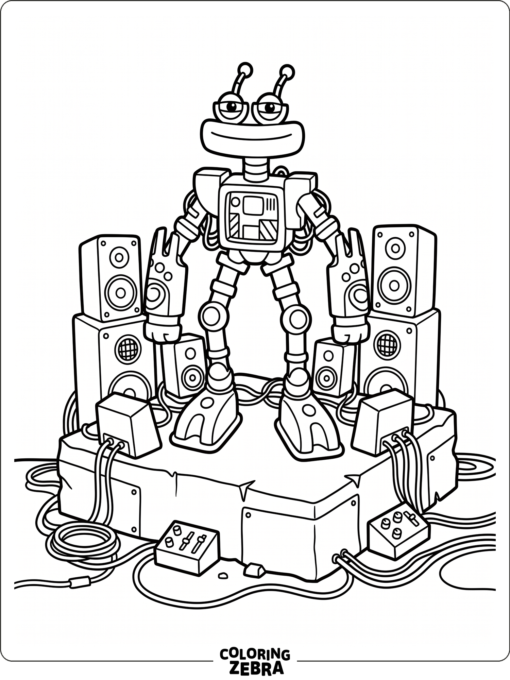

Wubbox Monster Coloring Page
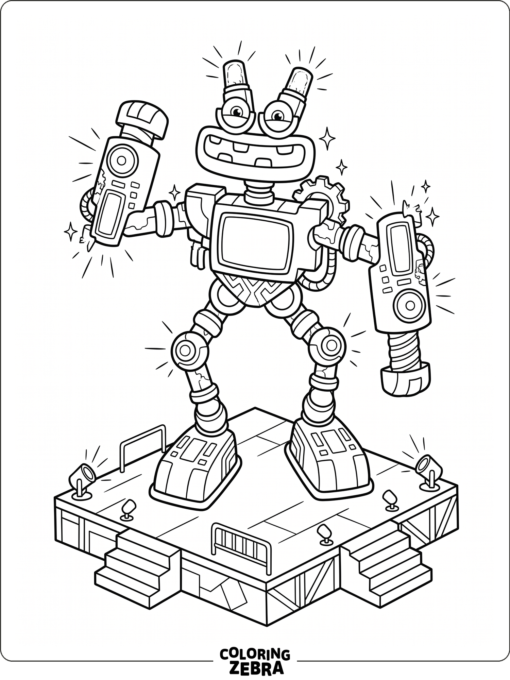

Epic Wubbox Coloring Sheet
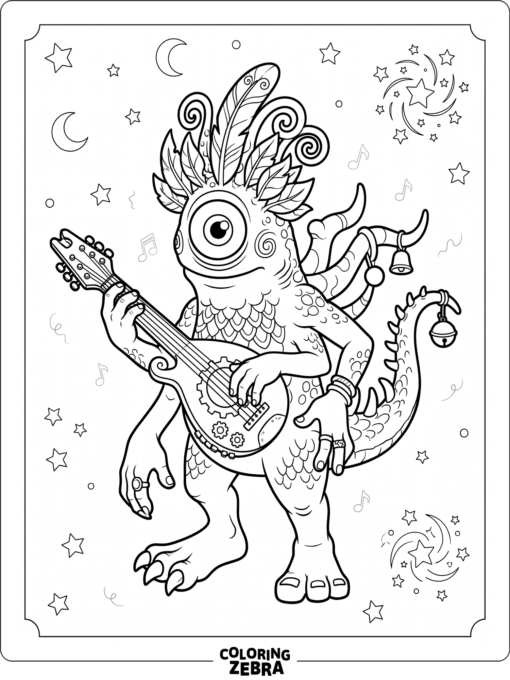

Rare My Singing Monsters Page
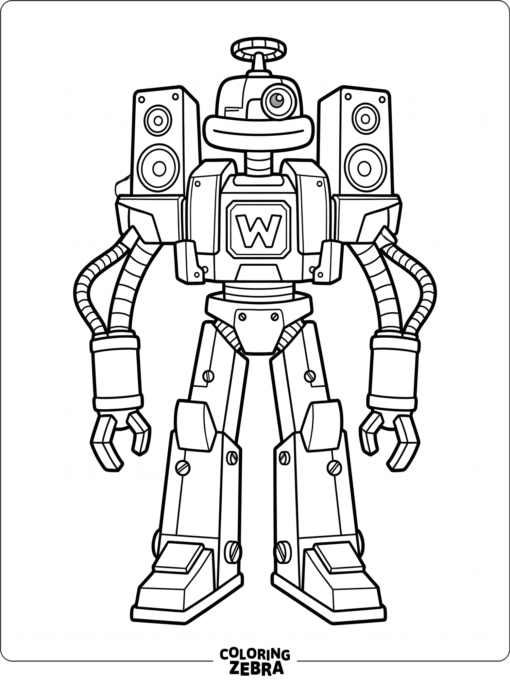

Rare Wubbox Coloring Page
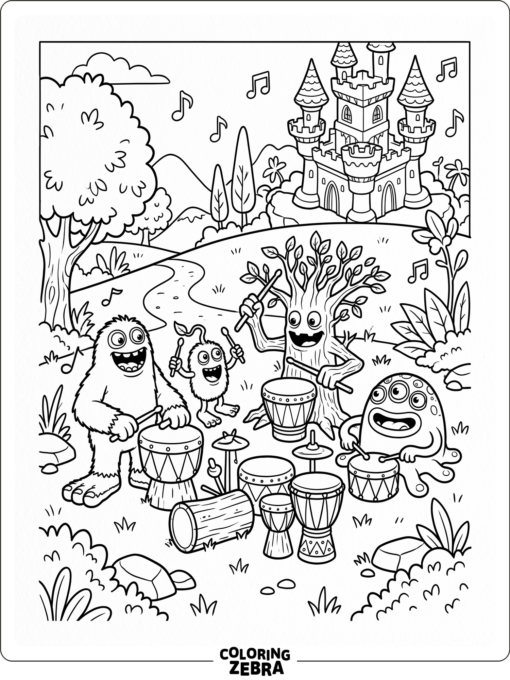

Monster Island Coloring Page
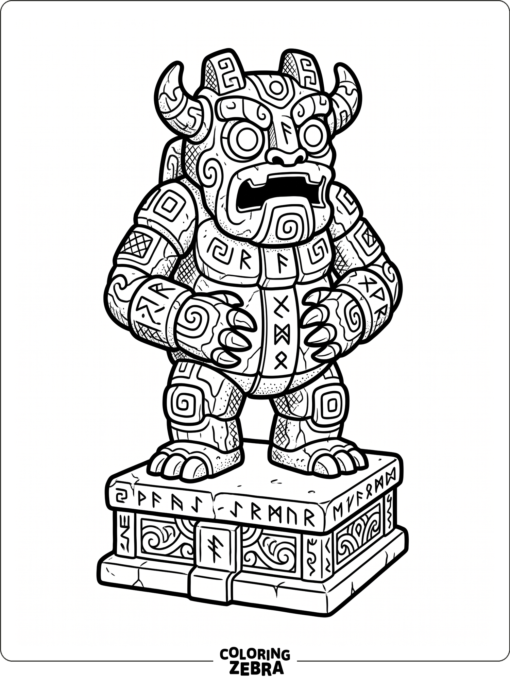

Wublin Monster Outline
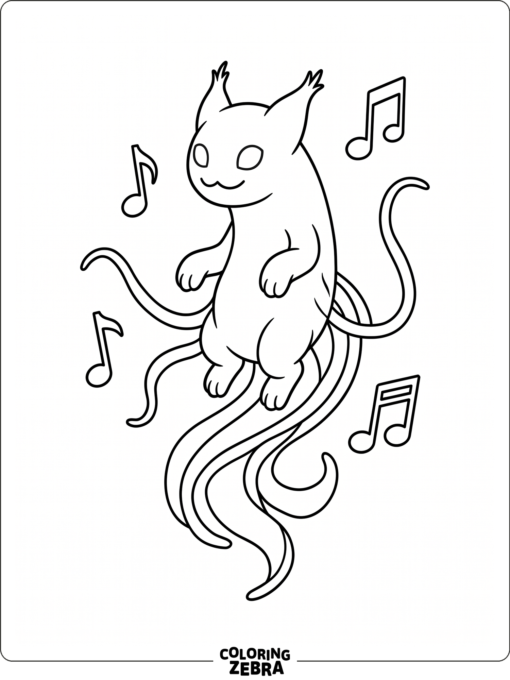

Ghazt Monster Coloring Page
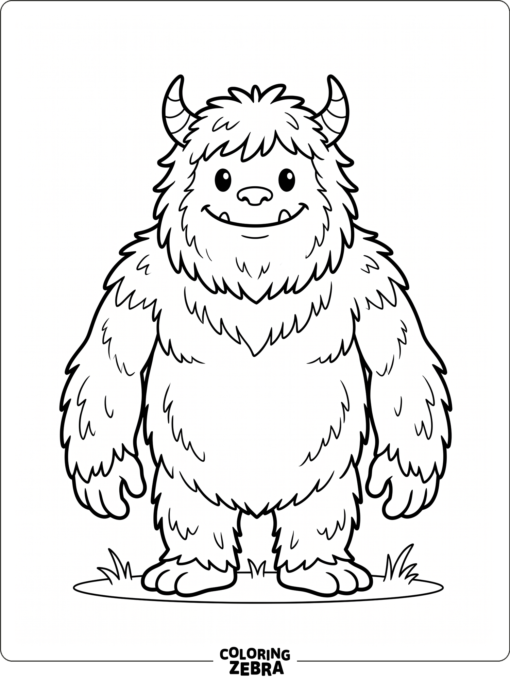

Mammott Monster Coloring Page
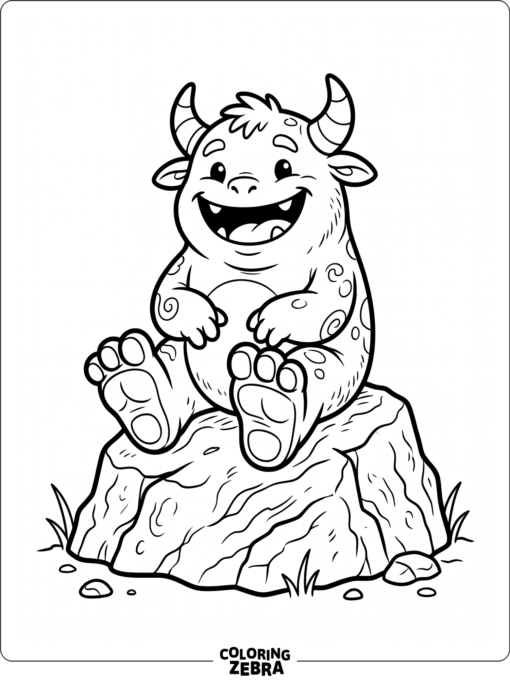

Noggin Coloring Page
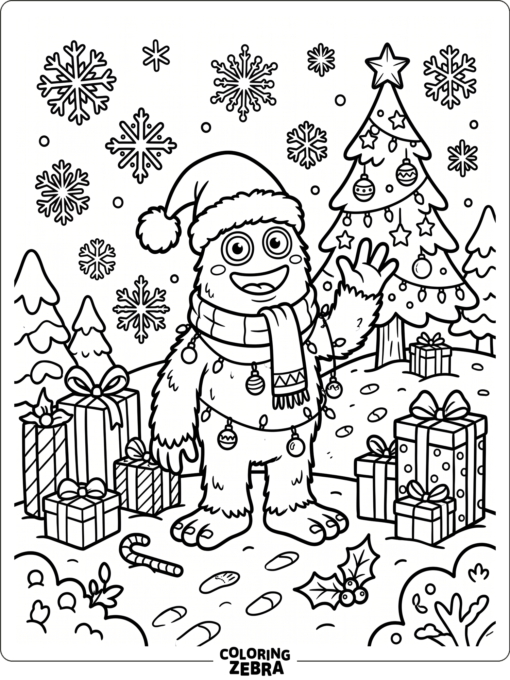

Christmas Monster Coloring Page
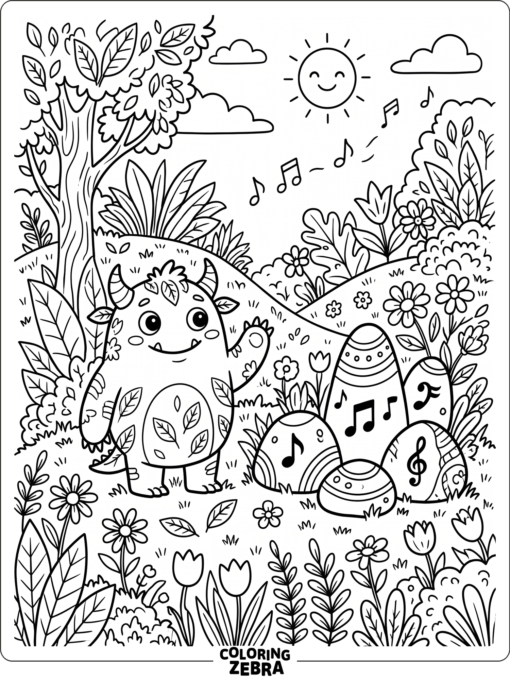

Plant Island Coloring Page
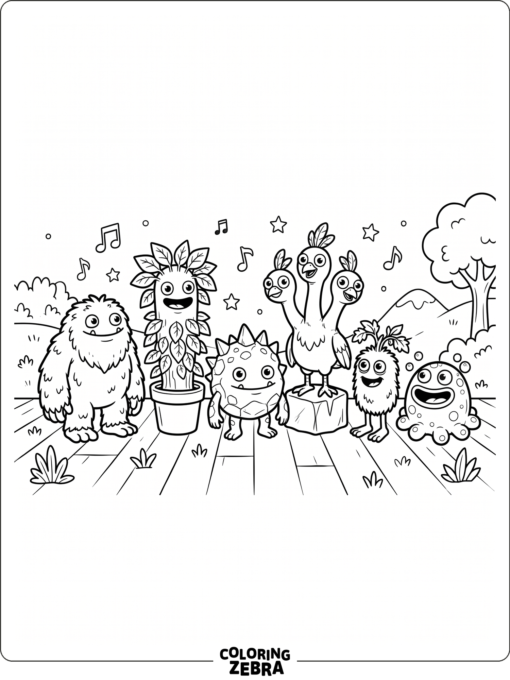

My Singing Monsters Characters Page
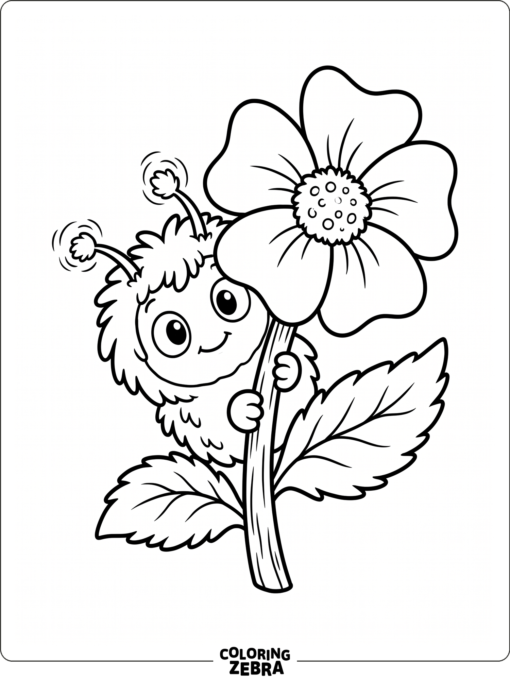

Furcorn Coloring Page
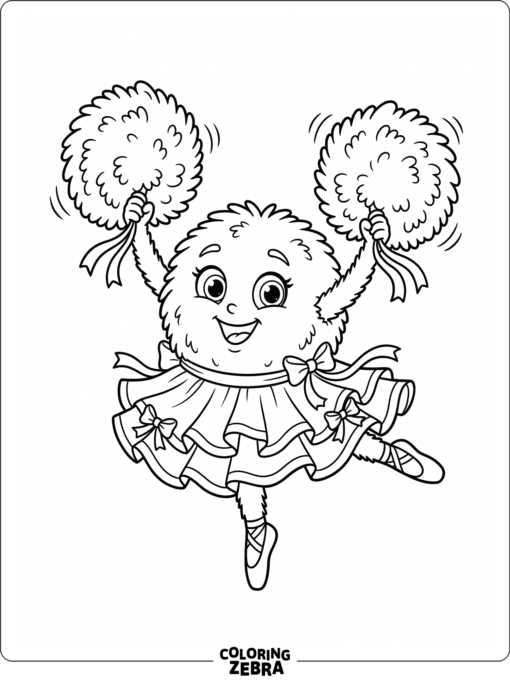

Pom Pom Monster Coloring Page
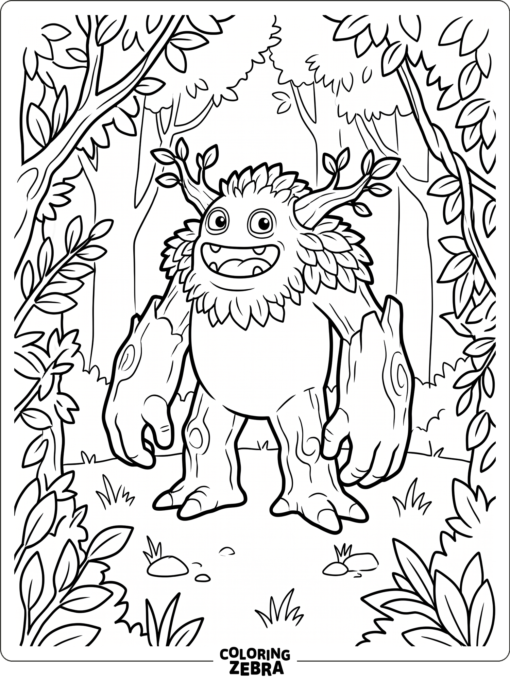

Entbrat Coloring Page
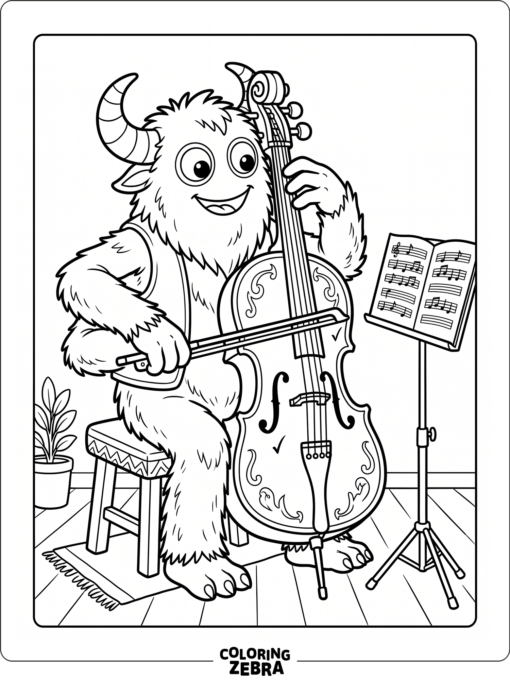

Bowgart Coloring Page
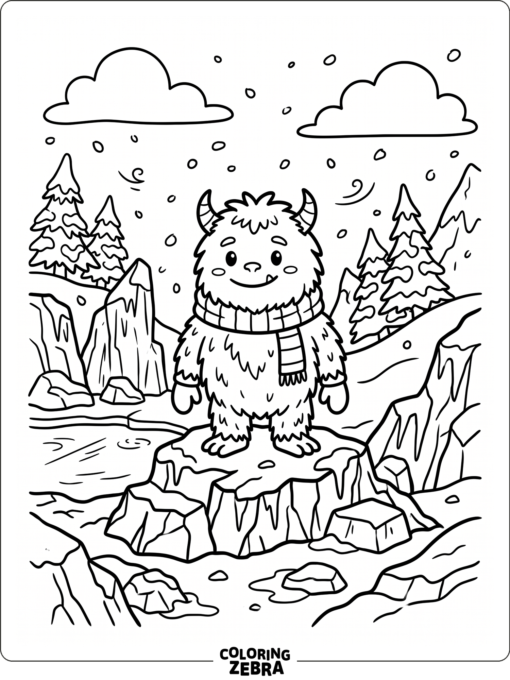

Cold Island Coloring Page
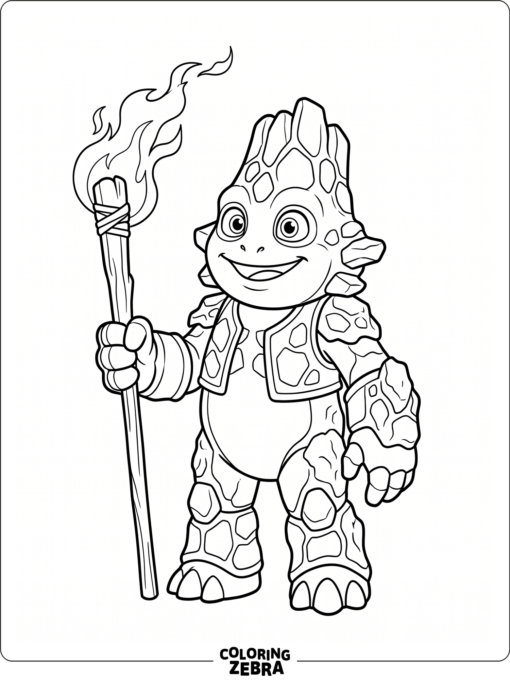

Kayna Monster Coloring Page
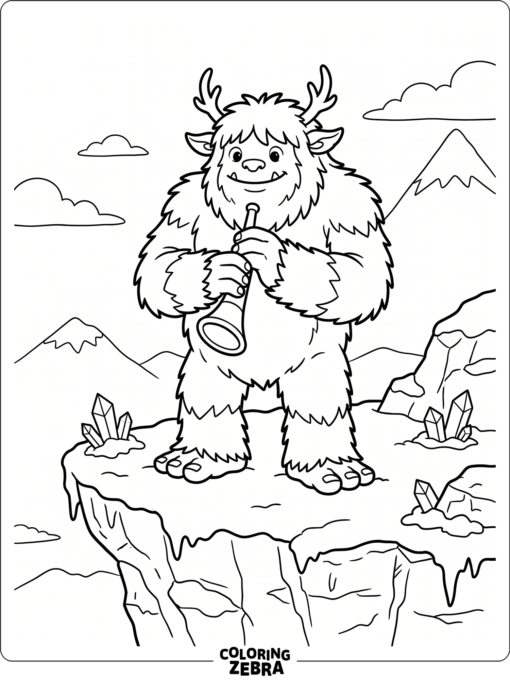

Deedge Coloring Page
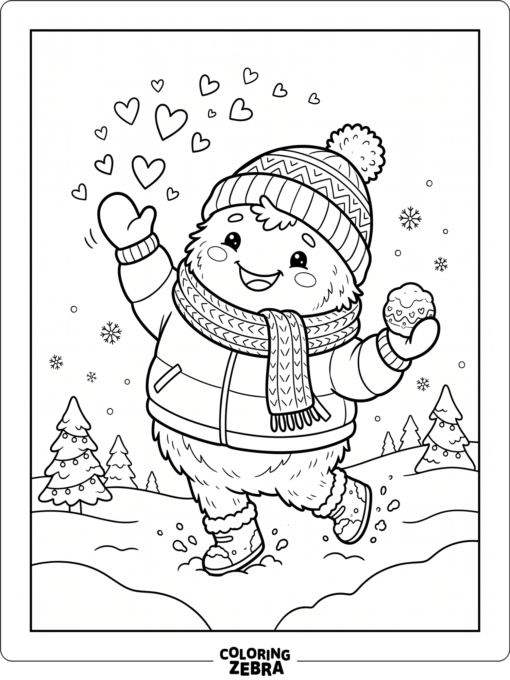

Schmoochle Monster Coloring Page
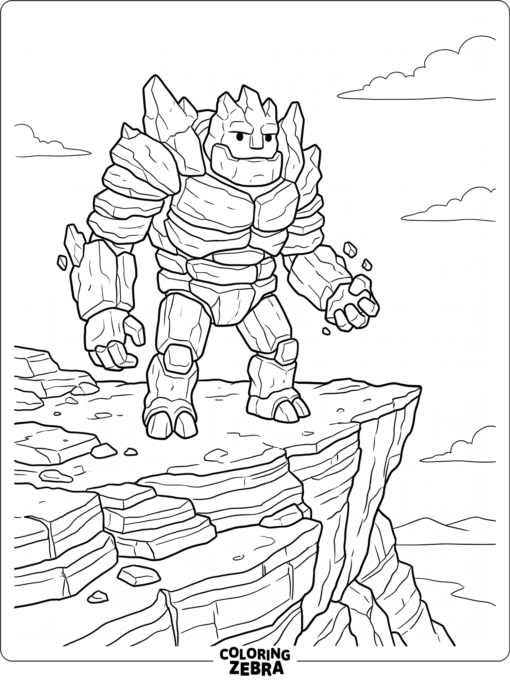

Quarrister Coloring Page
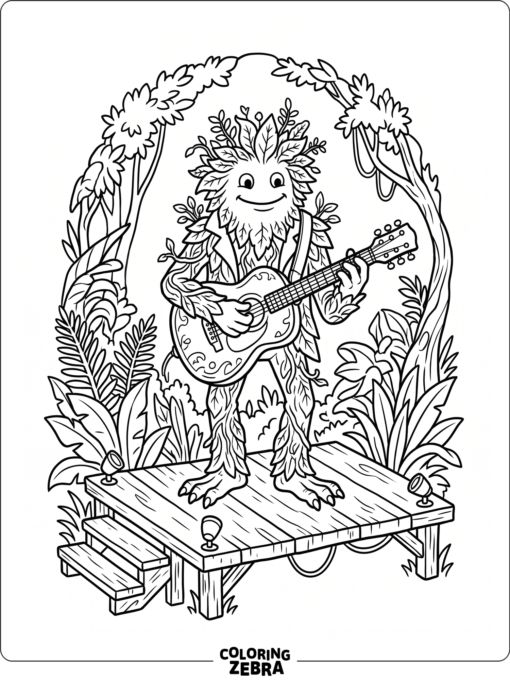

Shugabush Monster Coloring Page
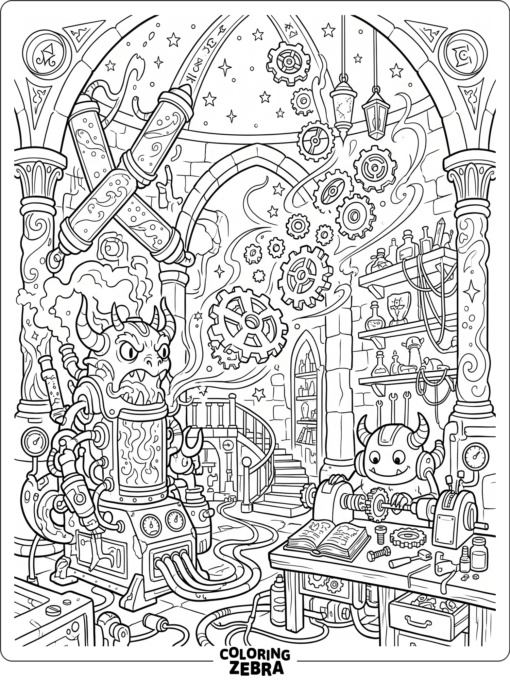

Ethereal Workshop Coloring Sheet
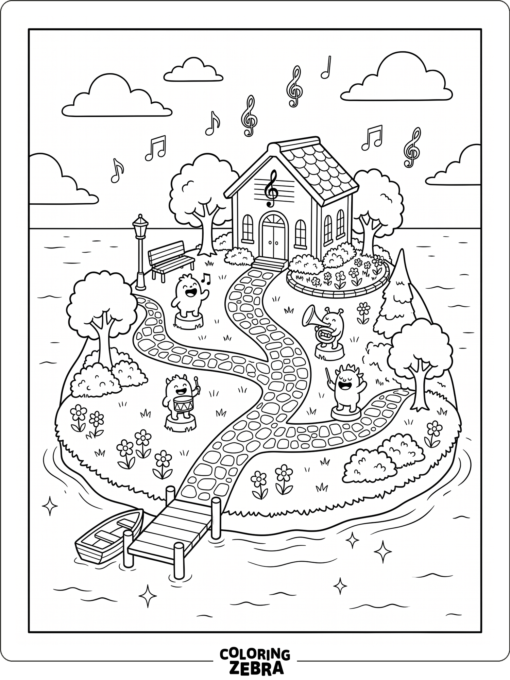

Composer Island Coloring Page
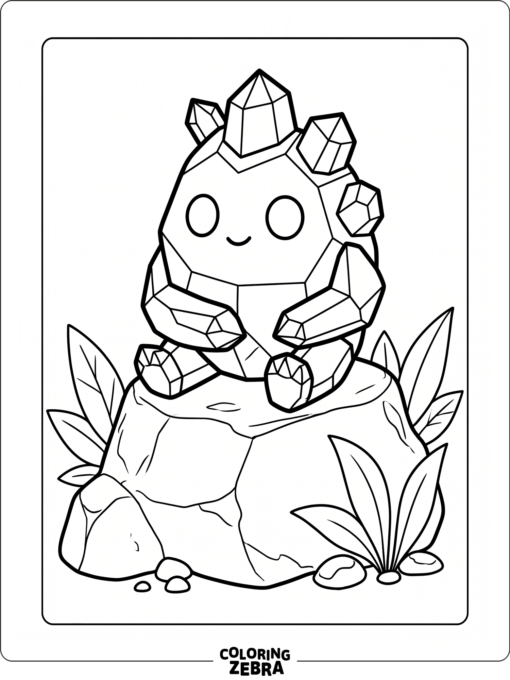

Jeeode Monster Coloring Page
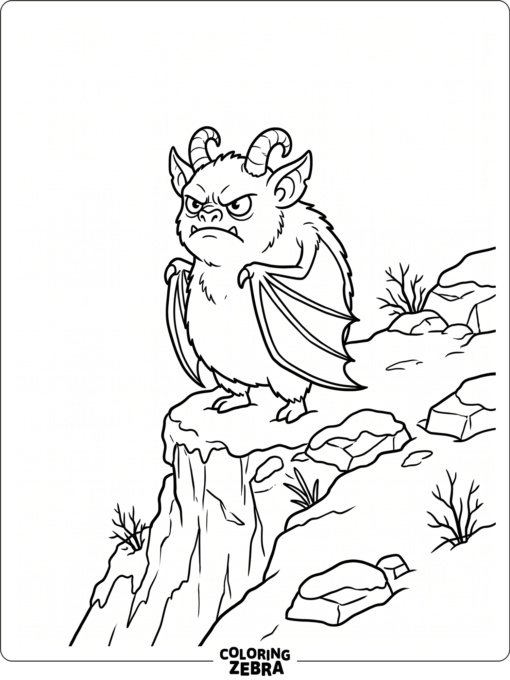

Grumpyre Monster Coloring Page
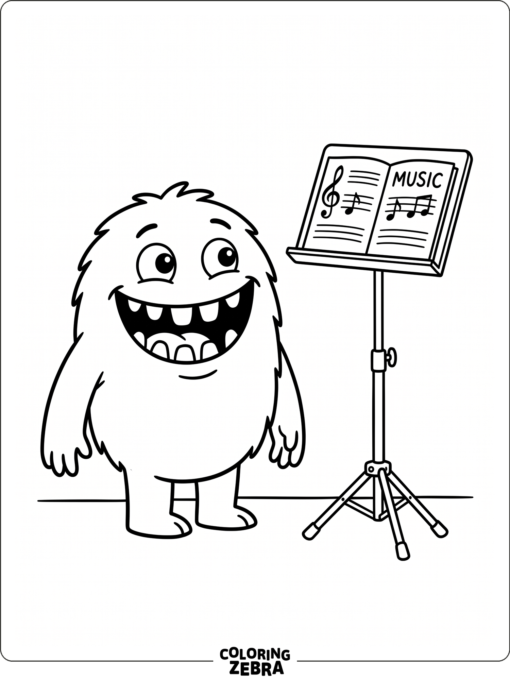

Maw Monster Coloring Page
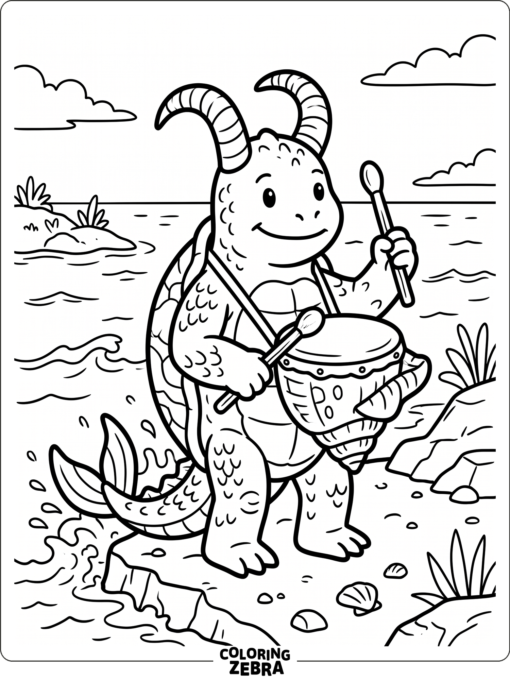

Shellbeat Monster Coloring Page
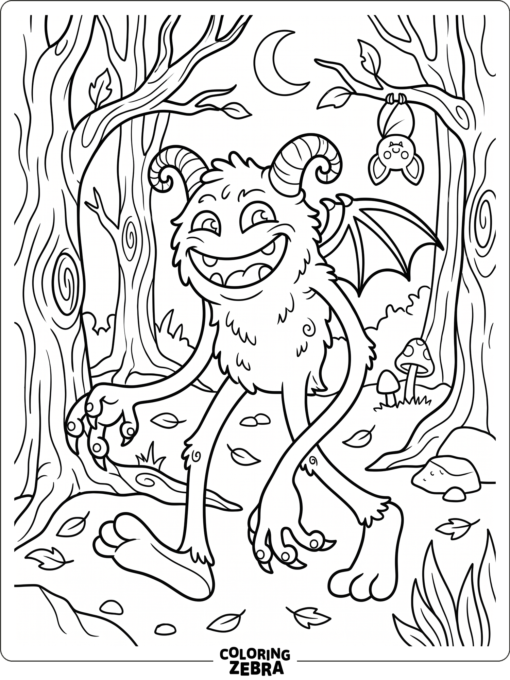

Hyehehe Monster Coloring Page
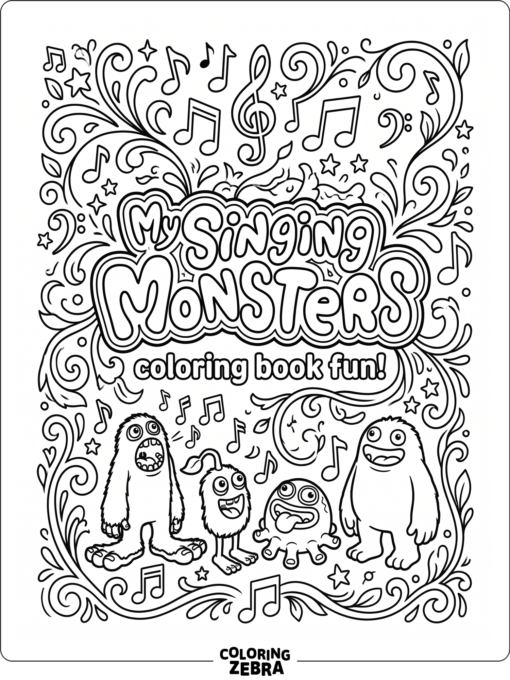

My Singing Monsters Logo Coloring Page
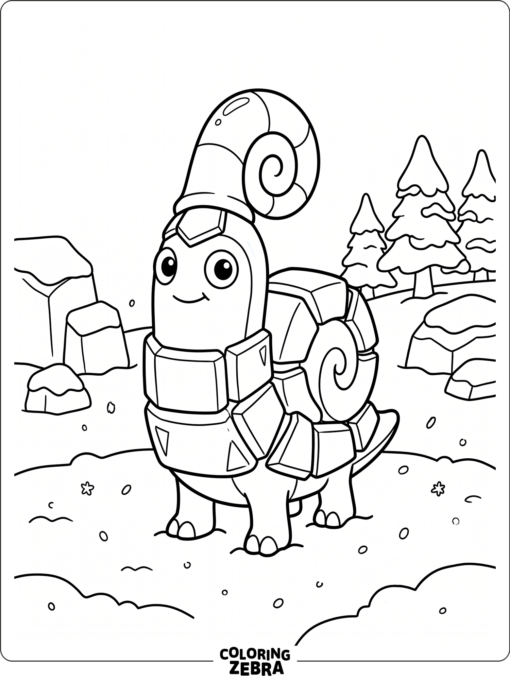

Strombonin Monster Coloring Page
A Musical World Built One Monster at a Time
My Singing Monsters Coloring Pages reflect the franchise’s central idea: individual creatures contribute vocal, instrumental, rhythmic, or sound-effect parts to a larger island arrangement. That musical theme appears throughout this set in drums, pipes, floating notes, speakers, cables, a music stand, and stringed instruments. Some sheets focus on a single performer, while others resemble an ensemble gathered for an island concert.
This concept offers a simple way to discuss musical layering. A beat can establish the pulse, a melody supplies a recognizable tune, and additional voices or effects add harmony and texture. Just as separate monsters combine their sounds in the game, colorists can build an image in stages by completing the background, main figure, musical equipment, and smallest decorative elements separately.
Recognizable Monsters in the Collection
Several confirmed characters have silhouettes that are easy to distinguish. Mammott faces forward with shaggy fur and small horns, creating broad areas for shading and many short edges to define. Noggin has a rock-like body, chunky feet, and a sturdy seated pose. Furcorn peeks from behind a flower, pairing a small character with soft plant shapes.
- Ghazt floats with long tendrils and nearby musical notes, making the composition feel light and suspended.
- Pom Pom dances with fluffy pom poms, offering a lively pose with repeated rounded textures.
- Entbrat appears in a forest clearing surrounded by organic scenery.
- Bowgart plays a cello-like instrument, directly connecting the character design to performance.
- Kayna holds a torch near lava rocks, while Deedge stands among snow and ice crystals.
- Schmoochle is framed by hearts in a playful pose.
- Quarrister stands on a rocky cliff, where its layered stone plates echo the surrounding terrain.
Other sheets feature a crystal-bodied creature, a winged figure on a snowy cliff, a shell-backed monster beside the water, and a horned figure in icy armor. These figures are best recognized through their visible anatomy rather than assigned unconfirmed names. The same approach applies to the wide-mouthed performer, the grinning forest creature, and the leafy guitarist shown on a stage.
Wubbox and Wublin-Themed Designs
The mechanical subjects are among the most intricate My Singing Monsters Coloring Pages in the collection. A large Wubbox stands on a platform with speakers and cables, while an Epic Wubbox has panels presented as glowing features. The Rare Wubbox design adds extra panels and tall speaker towers, producing a dense arrangement of geometric parts.
Rare and Epic are established variant labels in the franchise, but the sheets are most useful here as visual studies in machinery. Panels can be separated with contrasting tones, cables can be traced from one component to another, and speaker circles can be shaded as repeating patterns. A carved Wublin statue also appears on an altar-like base; because the available description does not identify a particular Wublin, its identity should remain open.
Island Settings and Environmental Contrasts
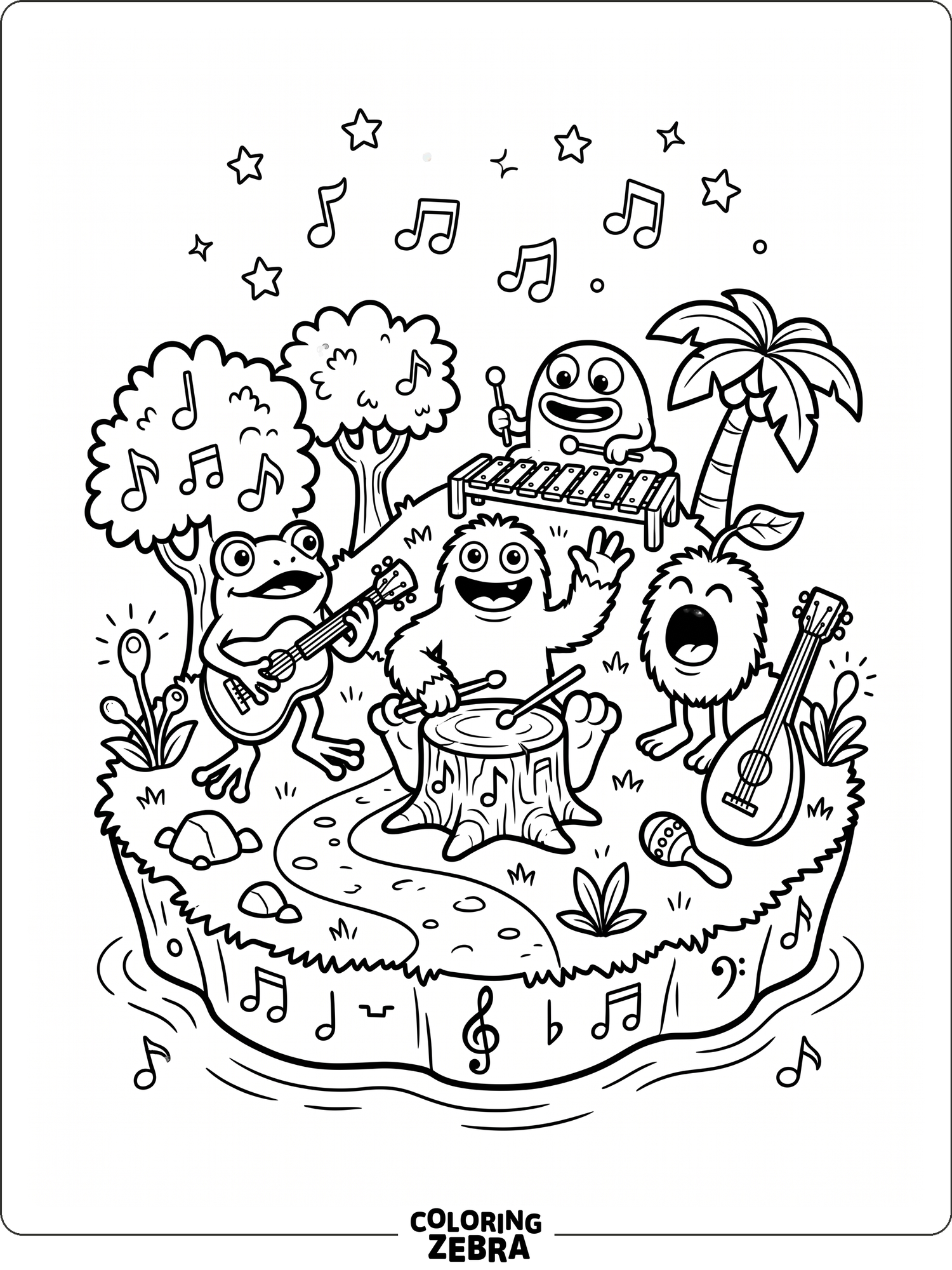
Plant Island imagery includes flowers, rocks, trees, paths, and a smiling monster. Cold Island scenes replace that leafy setting with snow, icy ledges, crystals, and rugged frozen rocks. Additional backgrounds include a rocky cliff, a lava-rock area, a waterside location, a spooky forest, a small island stage, and a workshop filled with floating gears and crystal machines.
These environments create useful contrasts between natural and constructed forms. Flowers, foliage, fur, shells, and trees use irregular curves, while the workshop and Wubbox scenes rely on panels, gears, platforms, and speaker towers. The rocky and crystalline subjects fall between those categories: both come from natural forms, yet their hard edges can look almost architectural.
Coloring Different Textures and Details
No single palette is required for these singing monster coloring sheets. An imagined color scheme can be planned around the mood of each setting: gentle neighboring hues for a leafy scene, sharp contrasts for machinery, or a limited group of tones for snowy line art. Leaving a few highlights uncolored can make crystal facets, icy surfaces, panels, and polished stone appear more dimensional.
- Fur: Follow Mammott’s shaggy outline with short pencil strokes rather than filling every section with one flat tone.
- Stone: Vary pressure across Noggin and Quarrister so adjacent plates and rocky surfaces remain distinct.
- Crystal: Treat each facet as a separate plane, alternating lighter and darker values.
- Machinery: Use repeated accents on matching speakers, cables, gears, and control panels to unify a complex design.
- Scenery: Color foreground figures more strongly and keep distant trees, rocks, or snow lighter to suggest depth.
Visual rhythm is another useful idea to explore. Repeated notes, stone plates, speaker circles, gear teeth, flowers, and rows of monsters guide the eye across a page much as repeated beats organize music. A colorist can emphasize that rhythm by repeating one accent color at regular intervals.
Solo Portraits and Group Performances
The set mixes close character studies with wider performance scenes. Mammott’s front-facing portrait and Noggin’s isolated pose provide clear outlines for younger colorists or quick projects. The tiny island stage is busier, with several friendly monsters, drums, pipes, and open performance space. Another sheet arranges creatures in a row, emphasizing differences in body shape, height, mouth design, and expression.
Performance imagery also includes Bowgart’s cello-like instrument, the leafy monster’s guitar, a wide-mouthed creature beside a music stand, and Ghazt surrounded by notes. A decorative franchise-style logo framed with notes and swirls offers a lettering-centered alternative to the character scenes. The festive design with gifts, snowflakes, and decorations can be treated as seasonal imagery without assigning it to a particular holiday or named event.
Ways to Use Finished Artwork
Completed My Singing Monsters Coloring Pages can support a music-themed display in which solo portraits represent individual performers and group scenes represent the full ensemble. Children can arrange several finished sheets in an order that moves from quiet-looking poses to busy stage compositions, then explain how the visual sequence suggests changes in volume or musical complexity.
Individual designs can also become binder covers, room decorations, game-night signs, or character-recognition cards. For a collaborative project, assign each participant a different setting or texture, such as fur, stone, crystal, plants, ice, or machinery. Displaying the results together highlights the franchise’s broad visual vocabulary while preserving each colorist’s personal interpretation.
People Often Ask Us…
-
When did My Singing Monsters begin?
-
Why does each monster make a different sound?
-
What is a Wubbox?
-
What are Wublins?
-
How do regular, Rare, and Epic Wubbox differ?