
Poppy Playtime Coloring Pages
Poppy Playtime Coloring Pages mix expressive toy mascots with eerie factory spaces full of pipes, machinery, and shadowy doors. The set ranges from Poppy in a glass case and cheerful Smiling Critters to Nightmare CatNap and Huggy Wuggy in dark hallways. Poster art, bold logos, pixel art, and color-by-number designs make the character shapes interesting to interpret. Friendlier scenes with DogDay and Kissy Missy provide a softer alternative to the damaged-factory imagery.
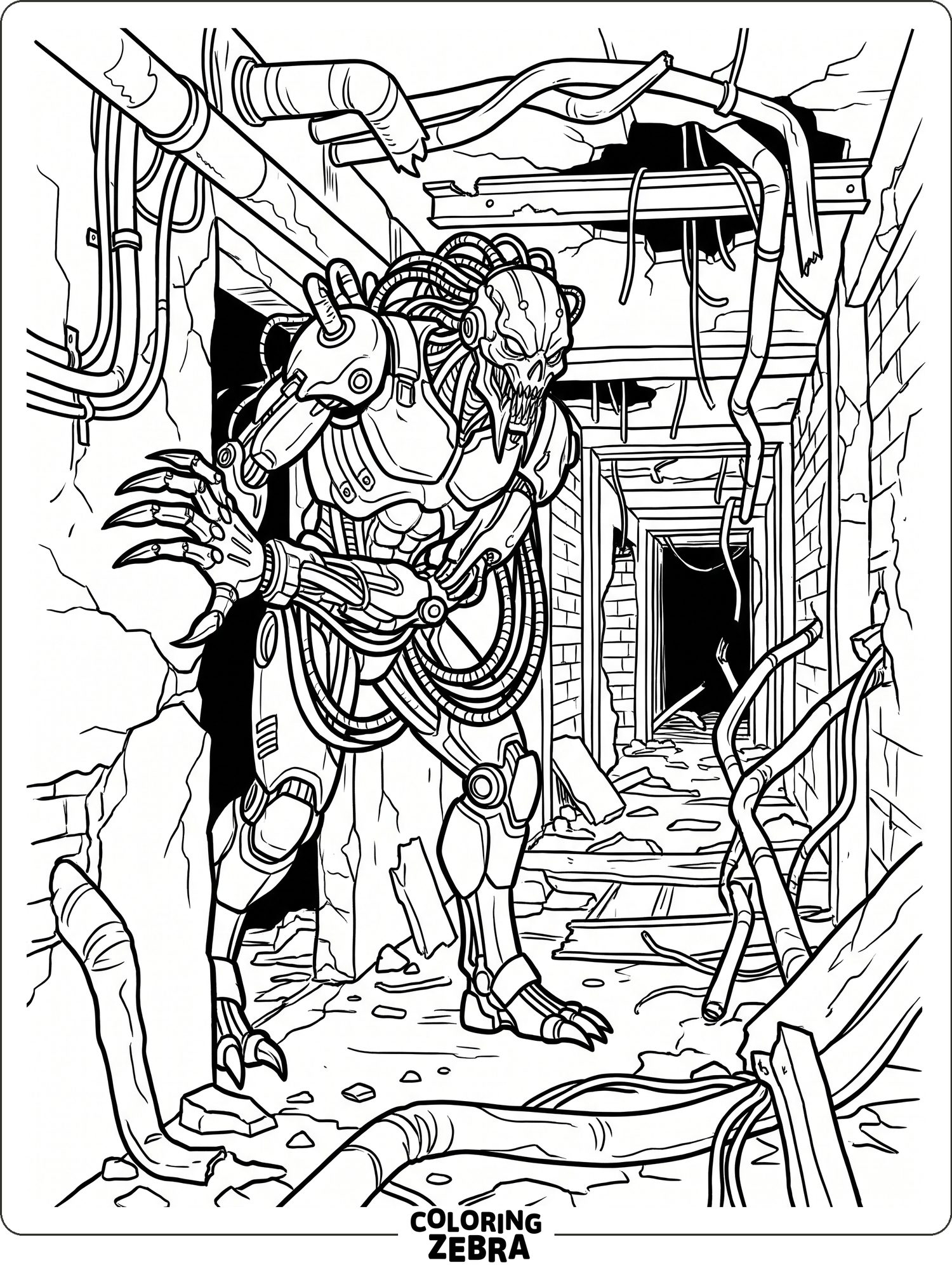
Print detailed factory scenes on bright white heavyweight paper so small pipes, yarn strands, and machinery remain clear. Choose fit-to-page sizing in the print dialog, and use draft or grayscale mode to conserve ink on bold-outline designs. Place an extra sheet underneath when coloring with markers.
Related coloring pages
Poppy Playtime Coloring Pages
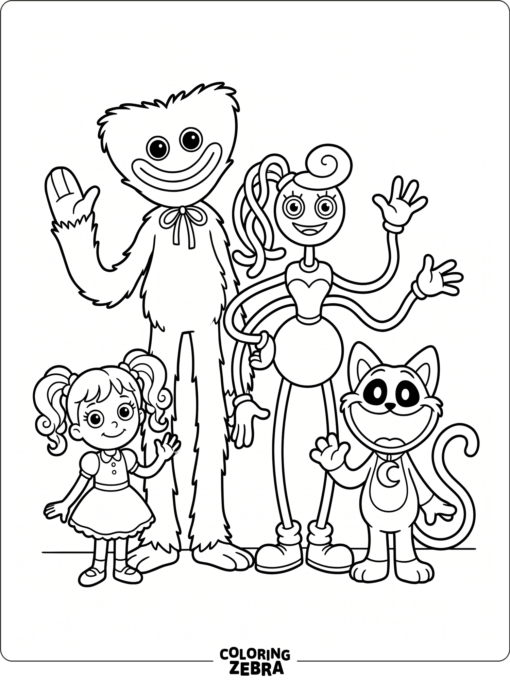

Poppy Playtime All Characters Coloring Page
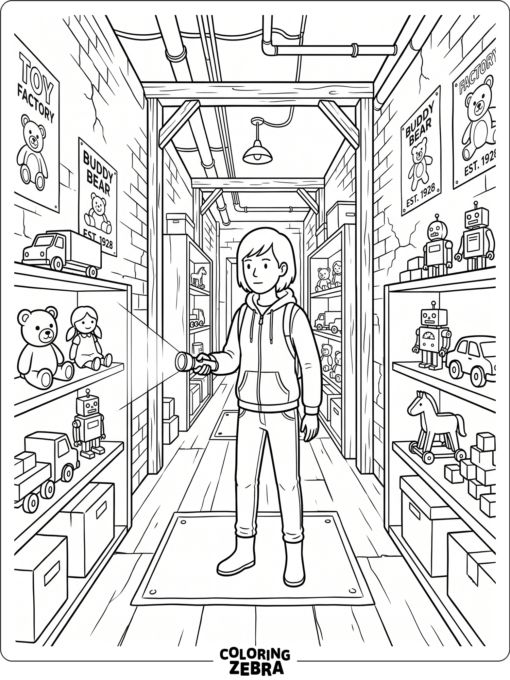

Poppy Playtime Chapter 4 Coloring Page
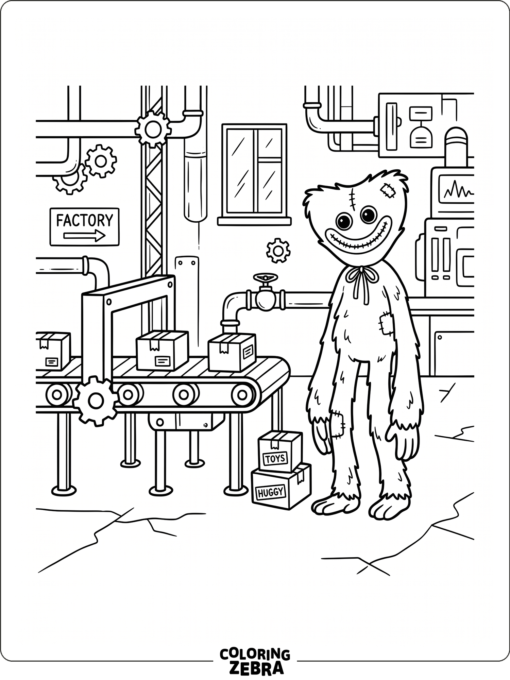

Huggy Wuggy Poppy Playtime Coloring Page
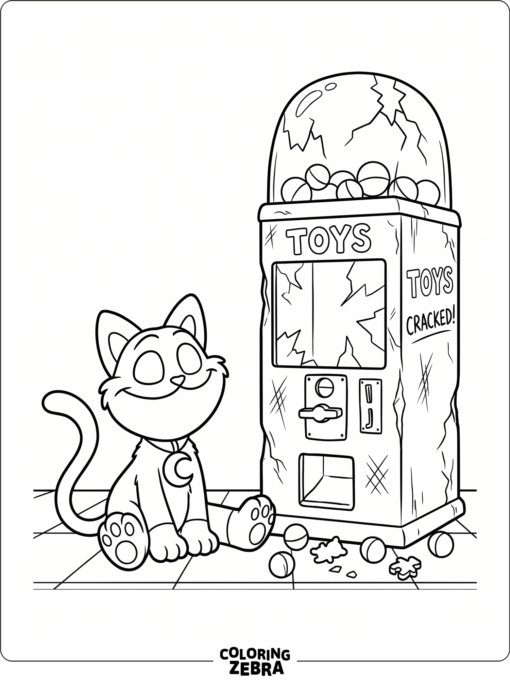

Poppy Playtime Chapter 3 Coloring Page
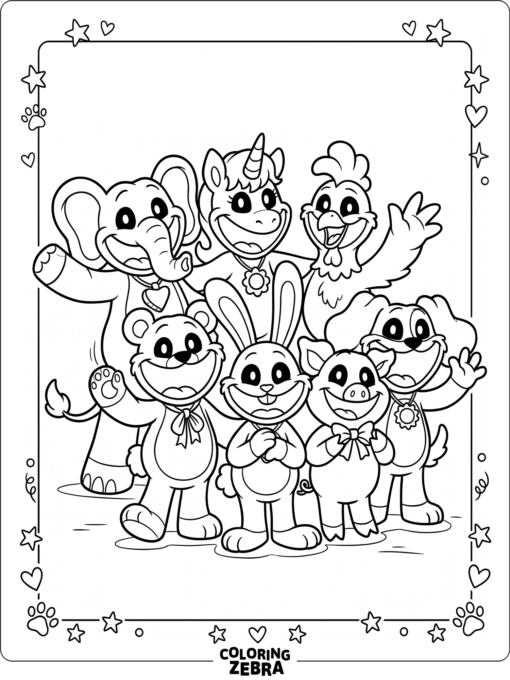

Poppy Playtime Smiling Critters Coloring Page
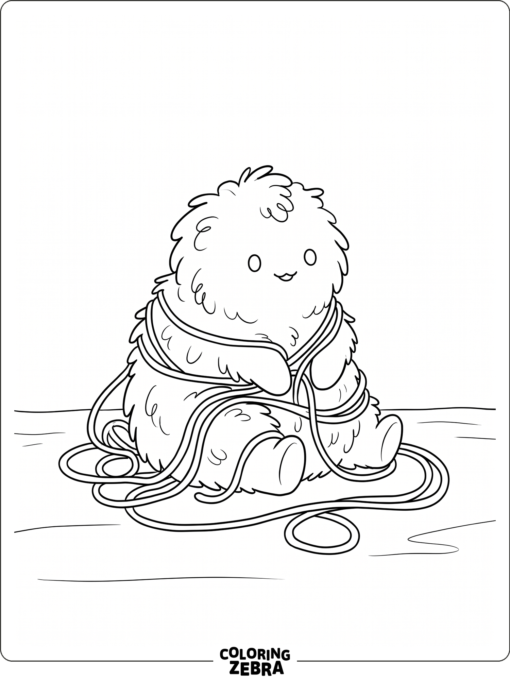

Yarnaby Poppy Playtime Coloring Page
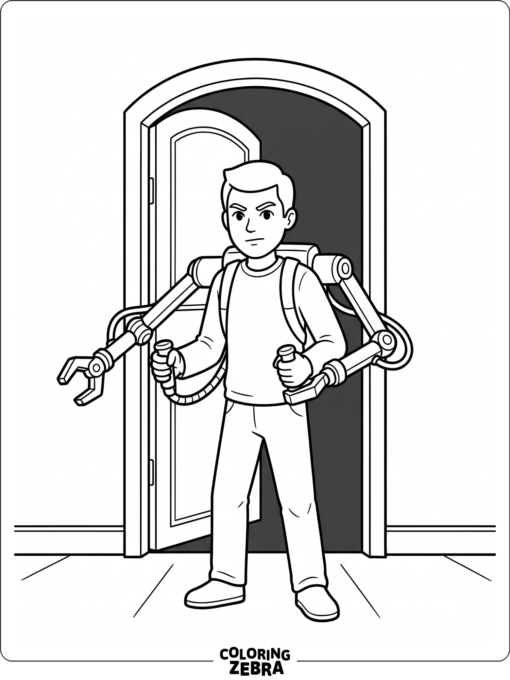

Poppy Playtime Player Coloring Page
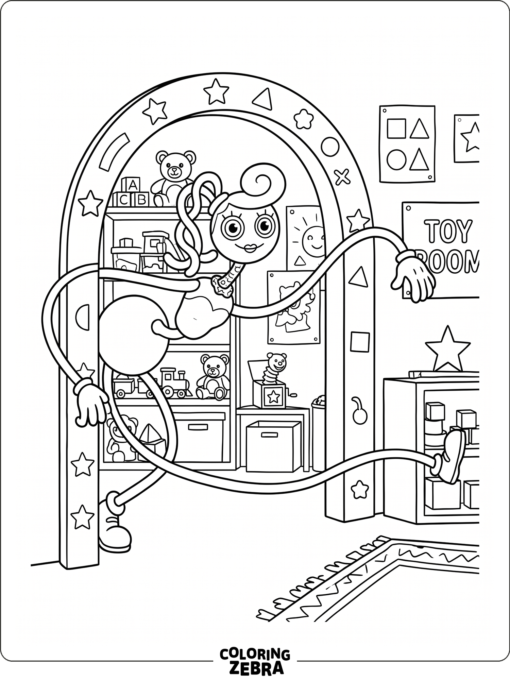

Mommy Long Legs Poppy Playtime Coloring Page
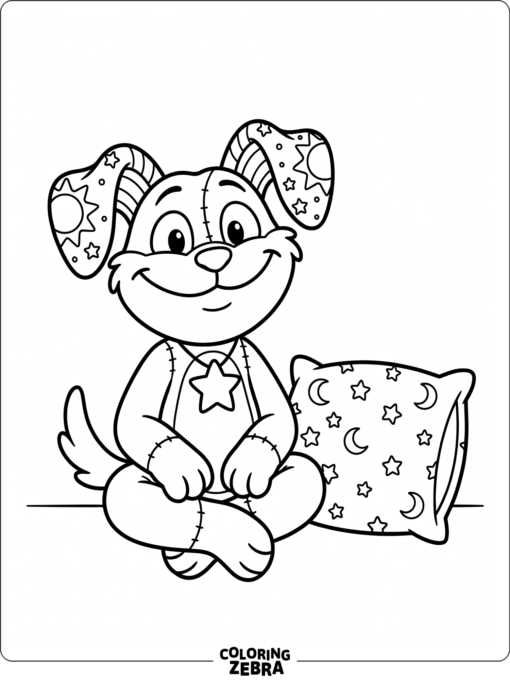

DogDay Poppy Playtime Coloring Page
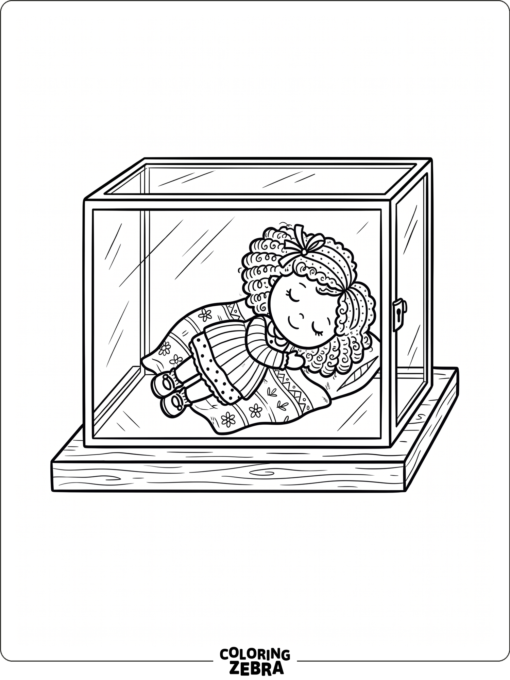

Poppy Doll Poppy Playtime Coloring Page
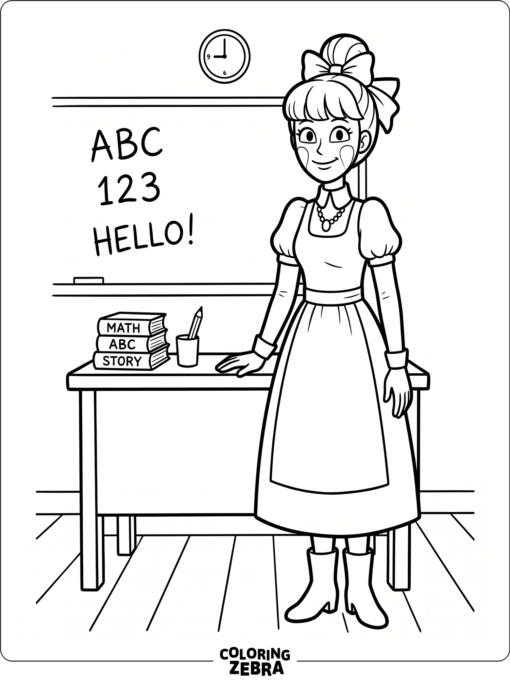

Miss Delight Poppy Playtime Coloring Page
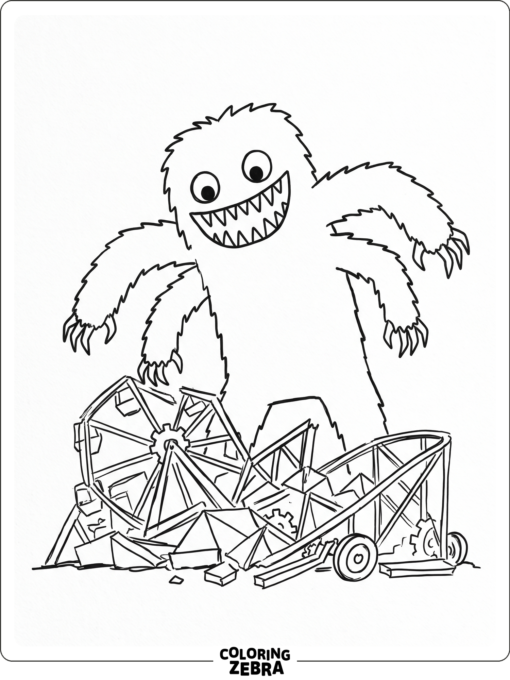

Killy Willy Poppy Playtime Coloring Page
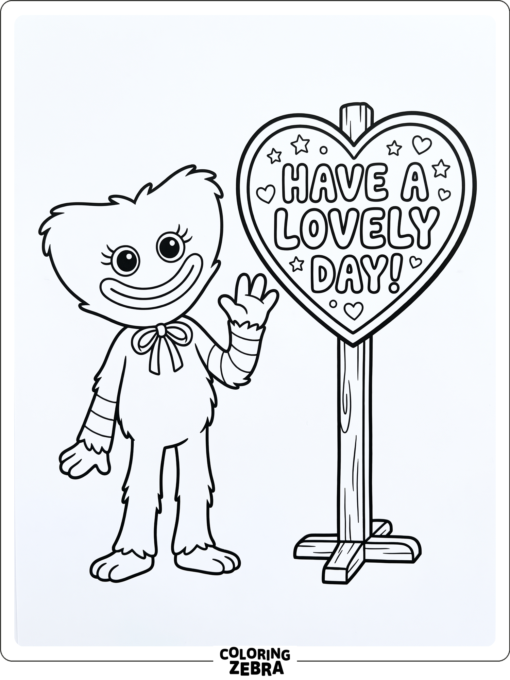

Kissy Missy Poppy Playtime Coloring Page
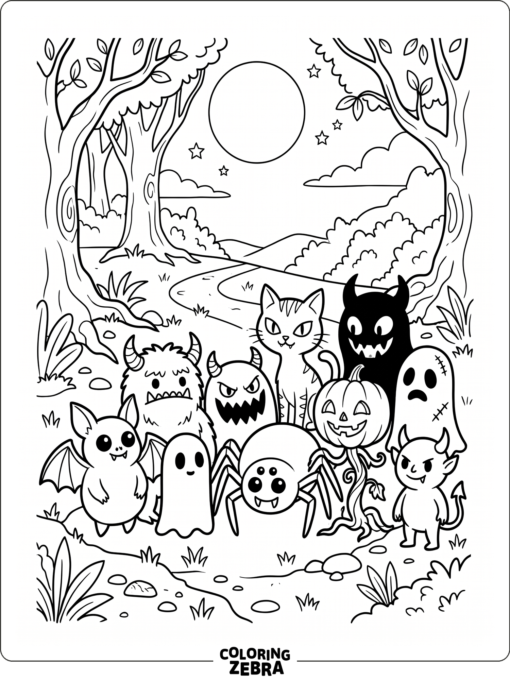

Poppy Playtime Nightmare Critters Coloring Page
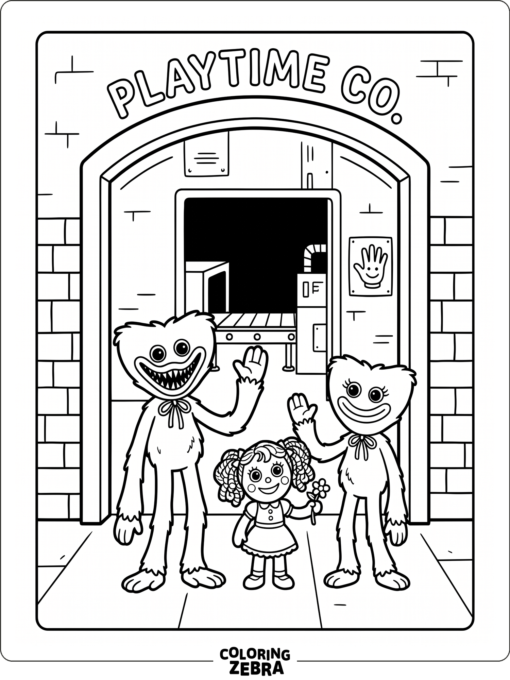

Kid Friendly Poppy Playtime Page
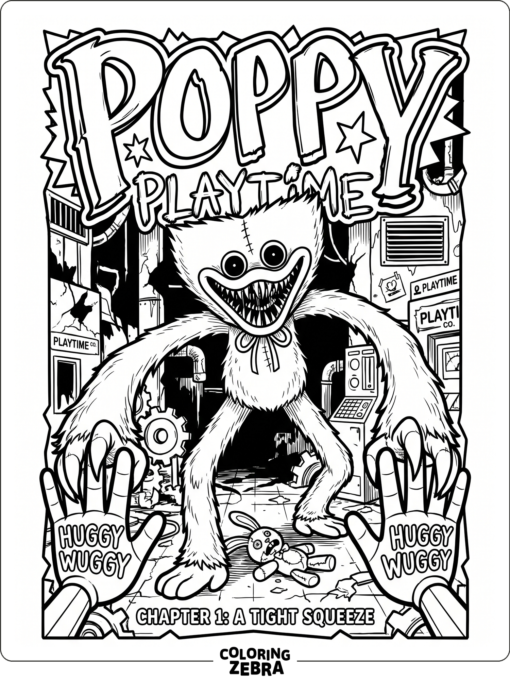

Poppy Playtime Poster Coloring Page
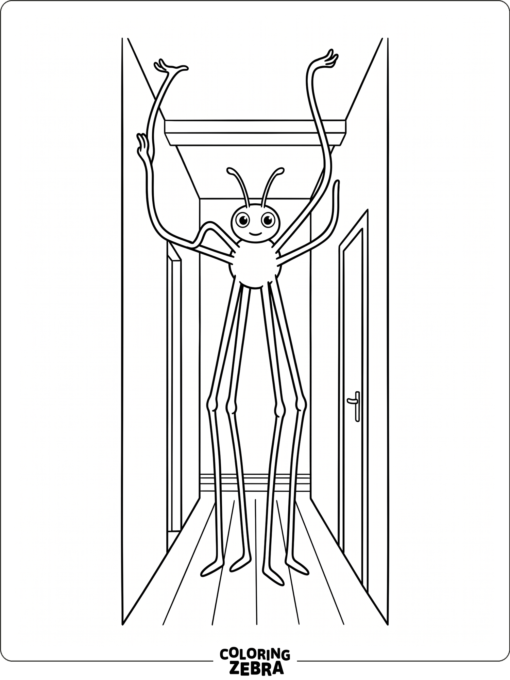

Daddy Long Legs Coloring Page
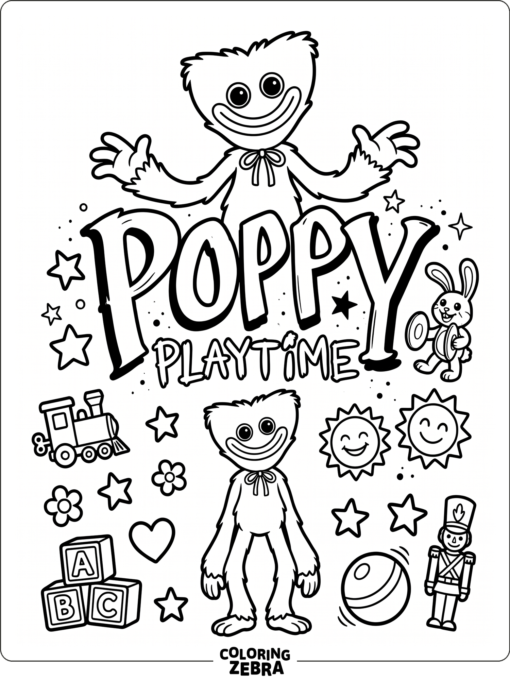

Poppy Playtime Logo Coloring Page
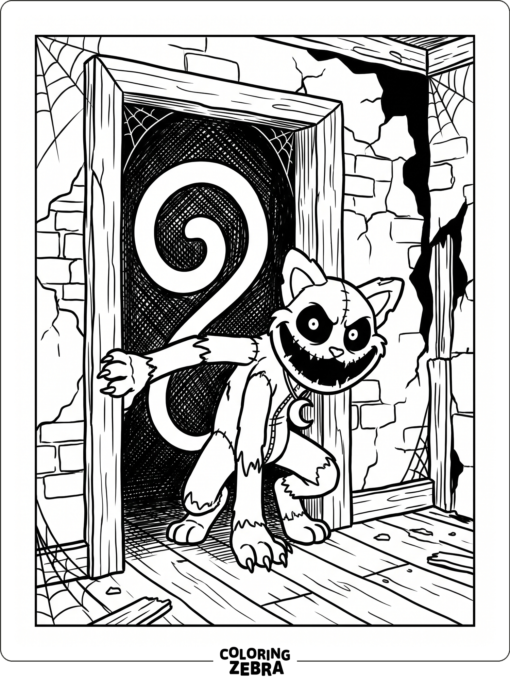

Nightmare CatNap Coloring Page
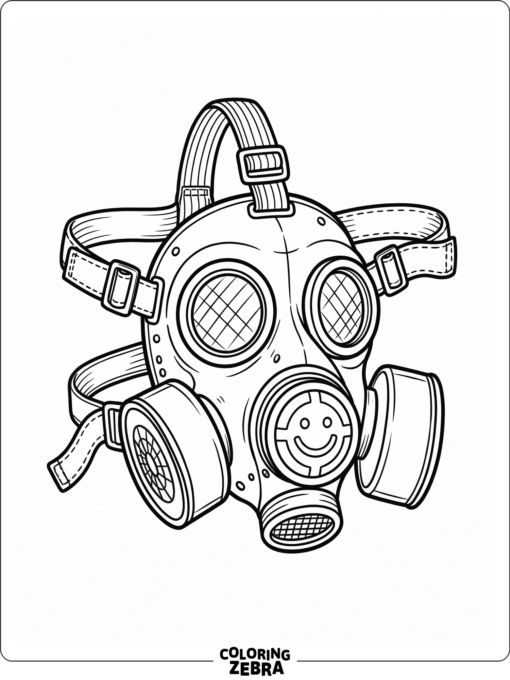

Gas Mask Coloring Page
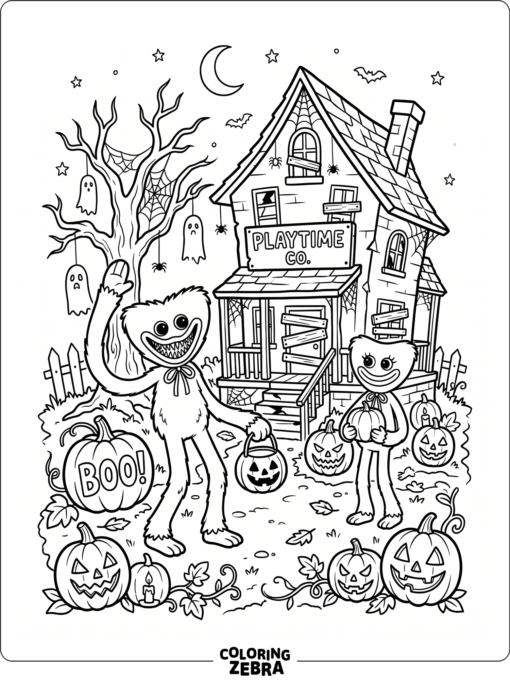

Poppy Playtime Halloween Coloring Page
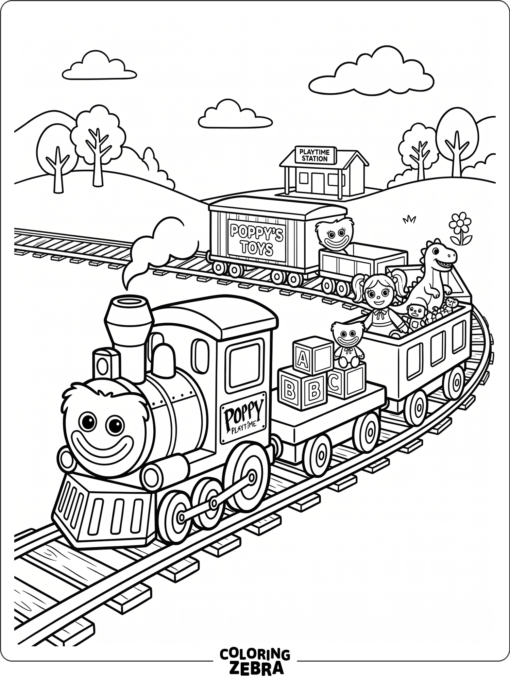

Poppy Playtime Train Coloring Page
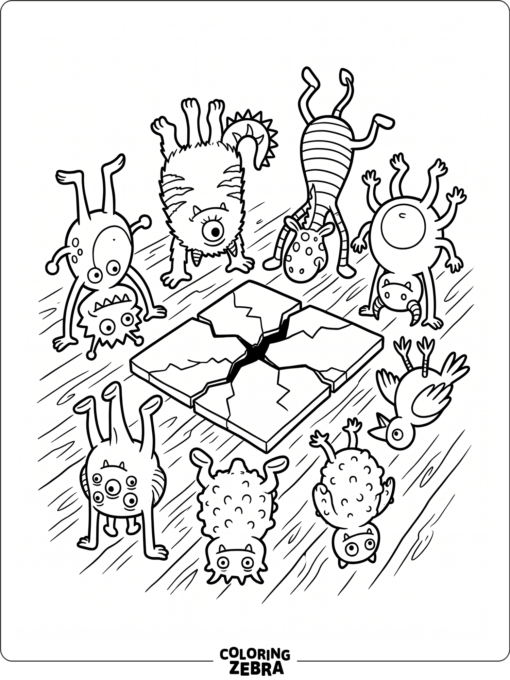

Wrongside Outimals Coloring Page
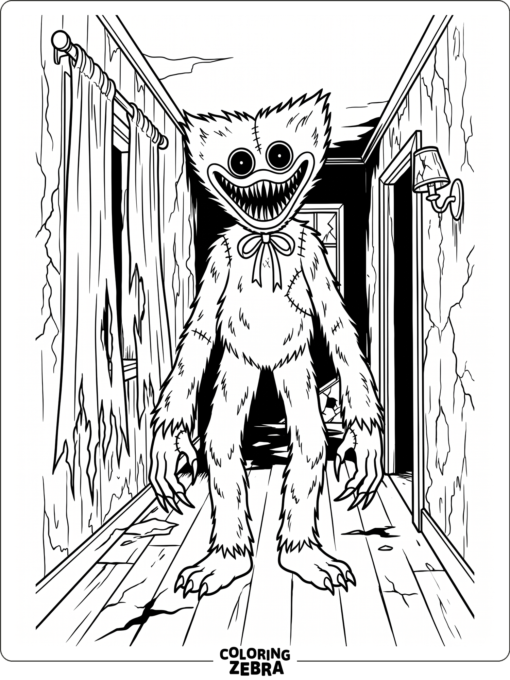

Nightmare Huggy Wuggy Coloring Page
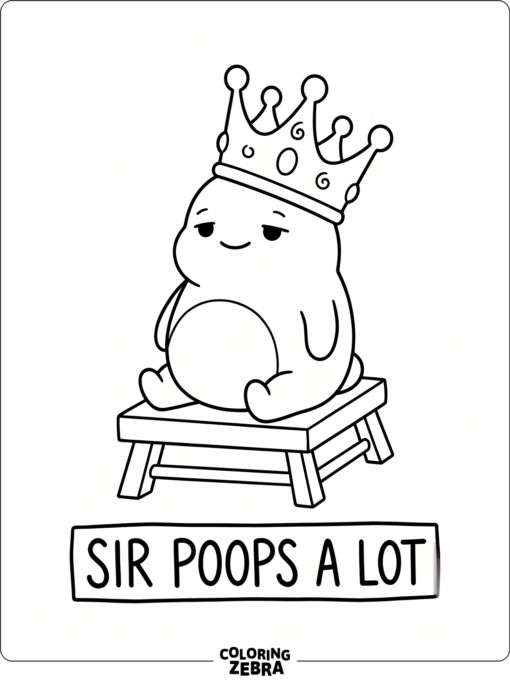

Sir Poops A Lot Coloring Page
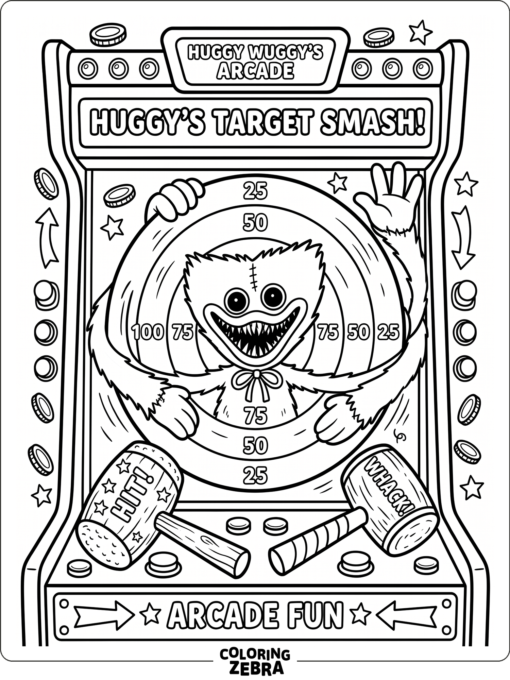

Wack A Wuggy Coloring Page
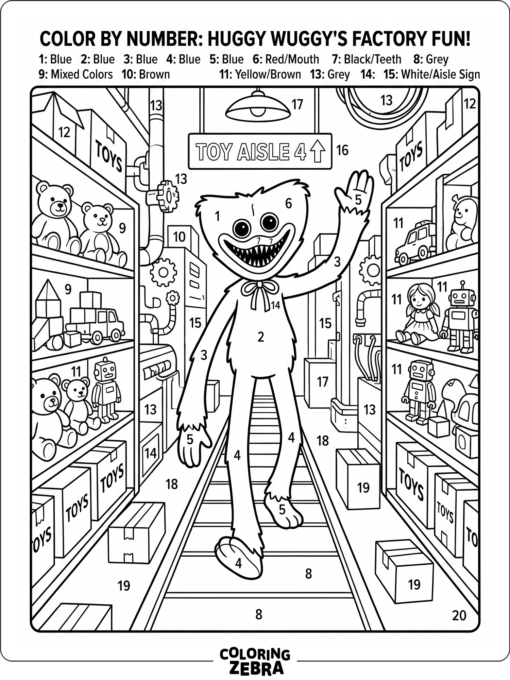

Poppy Playtime Color By Number Page
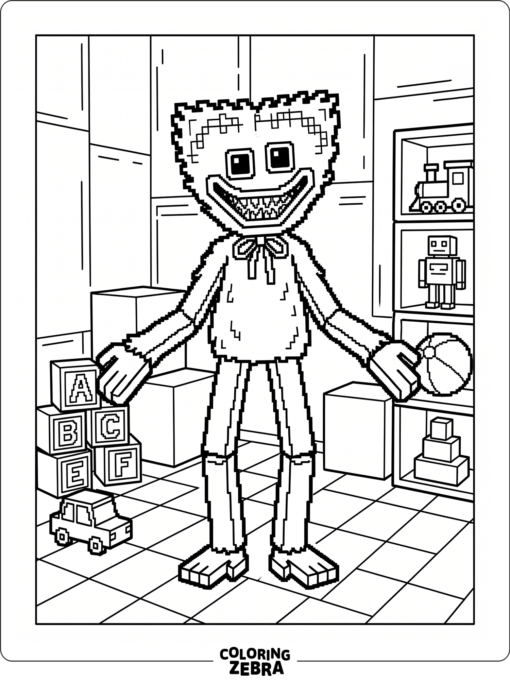

Pixel Art Coloring Page
Inside the Printable Collection
These Poppy Playtime Coloring Pages explore the contrast at the center of mascot horror: appealing toy designs placed inside damaged, mysterious industrial spaces. Major figures include Poppy, Huggy Wuggy, Mommy Long Legs, CatNap, Kissy Missy, DogDay, Miss Delight, Yarnaby, the Prototype, and the player. One group composition places Huggy Wuggy, Mommy Long Legs, CatNap, and Poppy together, while individual scenes give each figure more room for distinctive poses and surroundings.
The collection is not limited to character portraits. The Prototype appears in a broken hallway with bent pipes, Huggy Wuggy stands beside a conveyor belt, and CatNap sits near a cracked toy machine. Poppy rests inside a glass display case, a recognizable image connected to her identity as a doll. Elsewhere, Mommy Long Legs stretches through a toy-room archway, Miss Delight stands near a classroom desk and books, and Yarnaby is surrounded by loose yarn strands.
A few named figures, including Killy Willy, Daddy Long Legs, and Sir Poops A Lot, also appear in the supplied designs. Their inclusion in printable artwork does not by itself establish an official role in game canon. Killy Willy is shown above a broken amusement ride, Daddy Long Legs occupies a tall hallway, and Sir Poops A Lot stands on a small platform; those visible details are more reliable than speculative backstories or relationships.
The Factory as Part of the Story
Playtime Co. provides the fictional toy-company setting associated with Poppy Playtime. Conveyor belts, toy aisles, display cases, pipes, classroom furniture, machinery, and long corridors give the environment an industrial identity rather than making it a generic haunted building. These spaces also support environmental storytelling, where posters, toys, equipment, and damaged rooms suggest information without relying entirely on direct explanation.
The player appears through recognizable exploration equipment rather than a fully defined portrait. One page shows a flashlight being carried through a toy-factory corridor, while another places the player at a doorway with the GrabPack. In the games, the GrabPack uses extendable hand mechanisms for interaction and movement through the environment. The coloring image does not need to represent a particular puzzle for the tool to be visually recognizable.
A separate gas-mask design uses visible straps and strong outlines. It fits the hazardous factory atmosphere, but the page does not identify a wearer or a specific story event. This is a useful example of how an object can reinforce a setting without requiring extra lore.
Cheerful Mascots and Nightmare Scenes
The Smiling Critters gather in a cheerful group pose, while the Nightmare Critters occupy a distinctly spooky composition. That contrast demonstrates a basic feature of mascot horror: colorful, familiar-looking characters are set against darkness, damage, unusual scale, and uncertain surroundings. Door frames, silhouettes, and long hallways can create suspense without graphic content.
DogDay offers one of the gentlest scenes, sitting with a friendly smile beside a pillow. Kissy Missy also provides a warm alternative by waving near a heart-shaped sign. On the darker side, Nightmare CatNap is framed by a shadowy doorway, and Nightmare Huggy Wuggy stands in a dark hallway. Adults choosing pages for children may want to review these designs individually, since comfort with frightening faces and suspenseful settings varies considerably.
Coloring Different Art Styles
The Poppy Playtime Coloring Pages include several treatments that call for different coloring approaches. A poster-style composition emphasizes large title letters, so the typography can use a limited palette while the surrounding characters receive more varied colors. The bold logo surrounded by toy shapes works well with flat areas of color, repeated patterns, or a consistent set of brand-inspired hues.
- Detailed factory scenes: Use cool grays, muted blues, or rusty browns on pipes and machinery, then reserve brighter colors for the toy figures. Small highlights can help separate a character from a dark corridor.
- Glass and machinery: Leave narrow white areas on Poppy’s display case to suggest reflections. On cracked machines, alternate light and dark sections to make broken panels easier to distinguish.
- Yarn and stretched forms: Follow the direction of Yarnaby’s loose strands or Mommy Long Legs’ extended limbs with curved pencil strokes. This can clarify overlapping lines without relying on heavy outlines.
- Nightmare compositions: Deep purples, charcoal gray, dark blue, and limited bright accents can strengthen the doorway and hallway framing without covering the line work.
- Friendly portraits: DogDay, Kissy Missy, and the cheerful group scenes suit lighter backgrounds, decorative borders, or playful color combinations.
The color-by-number Huggy Wuggy page places the character in a toy aisle, combining a guided format with background detail. Follow the visible key if one is provided on the sheet rather than assuming a standard palette. The pixel-art Huggy Wuggy design converts curved features into square units, so coloring one block at a time helps preserve the crisp, digital appearance.
Toys, Games, and Seasonal Details
The toy-company theme continues through a train with small cars on tracks and a Whack-a-Huggy arcade setup. These elements expand the collection beyond factory corridors into toy and entertainment imagery. The broken amusement ride creates a more unsettling version of that theme, while the upside-down toy creatures form a strange group that should remain unnamed because their identities are not established by the artwork description.
The Halloween scene is the clearly seasonal choice in the set, with pumpkins supporting an autumn palette. Orange, black, deep violet, and green can unify the composition, although alternate colors are equally valid. No fixed character palette is required for personal coloring, so familiar designs can be reinterpreted with neon, pastel, monochrome, or limited-color schemes.
Using the Finished Artwork
Completed Poppy Playtime Coloring Pages can be arranged as contrasting pairs. Display the Smiling Critters beside the Nightmare Critters, or match friendly DogDay with the darker CatNap doorway scene. Pairing the flashlight corridor with the GrabPack doorway creates a small exploration-themed sequence, while the conveyor belt, cracked machine, and bent-pipe hallway can form a factory environment set.
The logo and poster compositions work well as covers for a homemade character folder. Smaller finished pages can become notebook inserts, bookmarks, or labels for organizing game-themed drawings. A classroom discussion can also compare how pixel art, bold outlines, poster typography, and detailed line art simplify the same kinds of mascot forms in different ways.
Understanding Names and Canon
Horror-game communities often circulate official characters alongside fan creations, nicknames, speculative variants, and unofficial relationships. A name appearing on a coloring sheet is not proof that the figure has a canonical role. This is especially important for Killy Willy and Daddy Long Legs, whose official status or relationships should not be inferred from these images alone.
The most dependable approach is to describe what is visible: a figure in a hallway, a character over an amusement ride, or a group posed upside down. The same caution applies to nightmare labels, character origins, powers, chapter appearances, and story events. Careful descriptions preserve the mystery of the artwork while keeping the collection accurate for fans who know the games and for newcomers exploring mascot-horror design.
People Often Ask Us…
-
What is Poppy Playtime?
-
Who is Poppy?
-
Who is Huggy Wuggy?
-
Who are the Smiling Critters?
-
What is the Prototype?