
Hanukkah Coloring Pages
Hanukkah Coloring Pages invite colorists to explore an eight-night Jewish festival through light, history, food, and family customs. The 26 scenes range from bold single-menorah outlines to ornate designs filled with swirls, stars, ribbons, and borders. Dreidels, gelt, latkes, sufganiyot, an oil jug, and Temple imagery add meaningful details to discover. Children can also color family observances, paper crafts, presents, garlands, and a cheerful mouse wearing a kippah.

Print bold, simple designs on standard printer paper, or choose heavier paper when using markers or gel pens. Select “fit to page” to preserve the complete border, or reduce the scale to make smaller decorations and cards. Use grayscale or draft mode for ink-saving copies, and place a spare sheet underneath marker pages to prevent bleed-through.
Related coloring pages
Hanukkah Coloring Pages Free PDF Printables
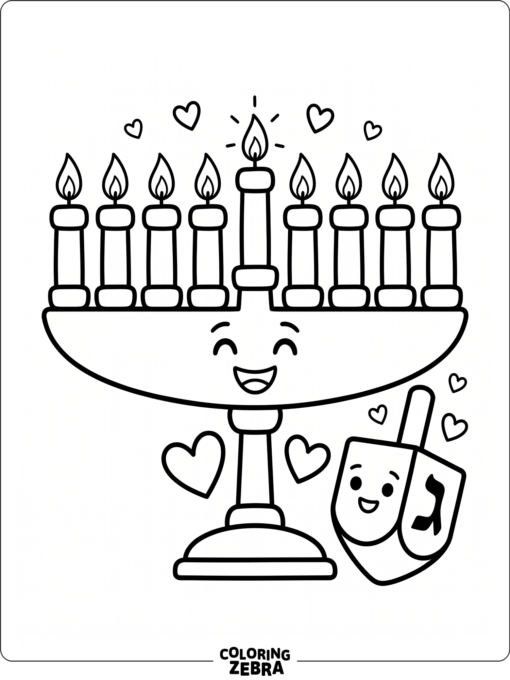

Cute Hanukkah Coloring Sheet
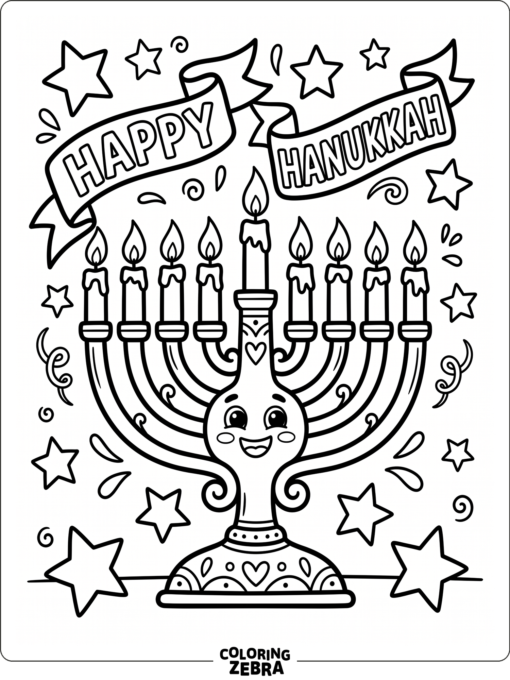

Happy Hanukkah Printable
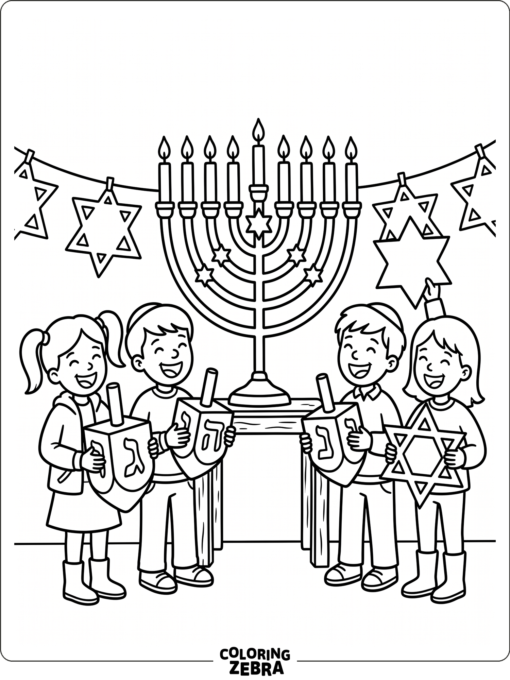

Hanukkah Coloring Page for Kids
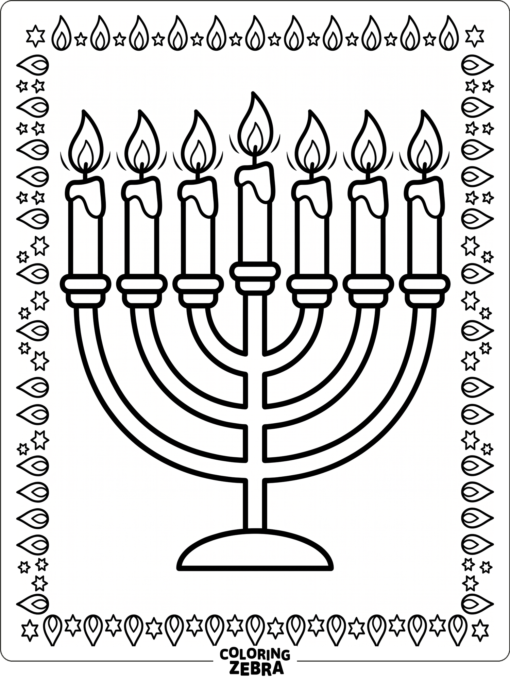

Hanukkah Menorah Coloring Page
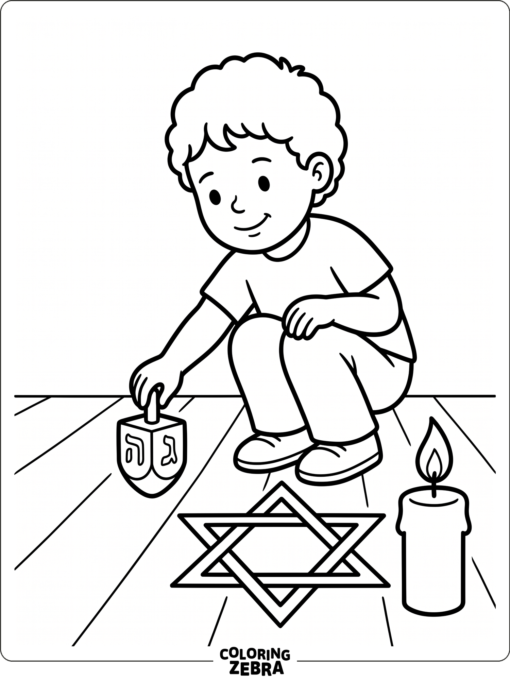

Hanukkah Coloring Page for Preschool
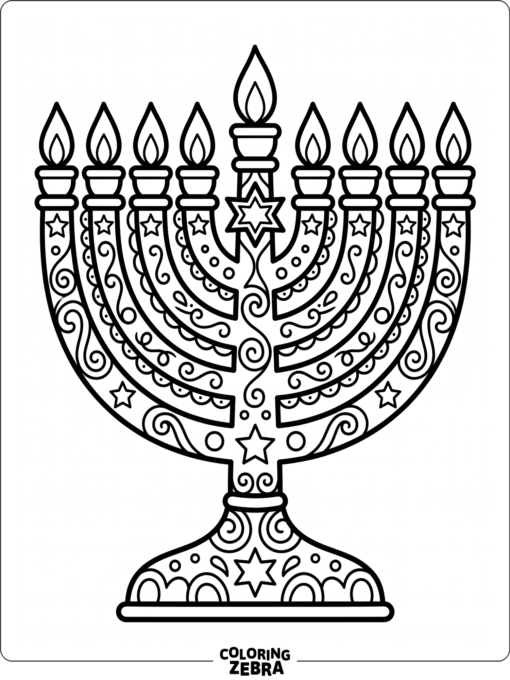

Hanukkah Coloring Page for Adults
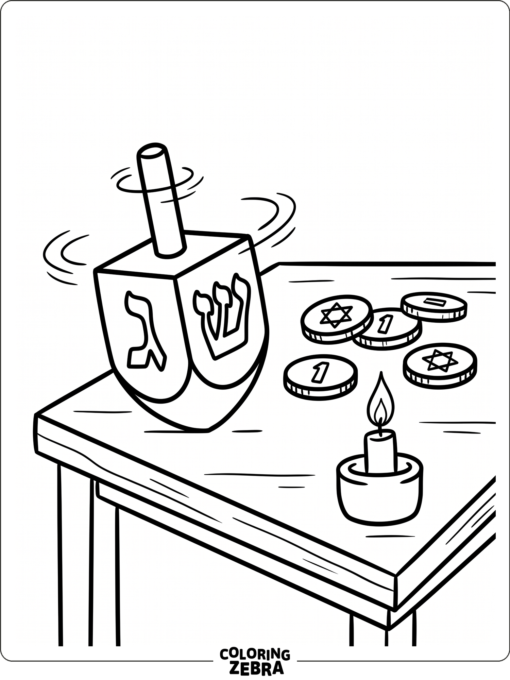

Dreidel Coloring Page
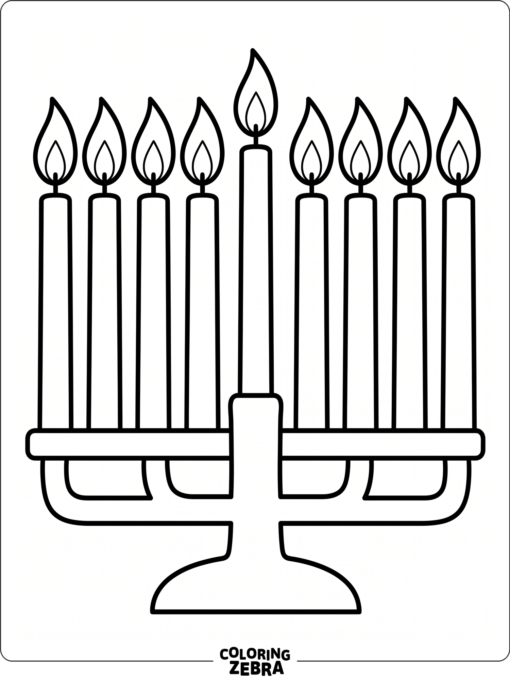

Hanukkah Candles Coloring Page
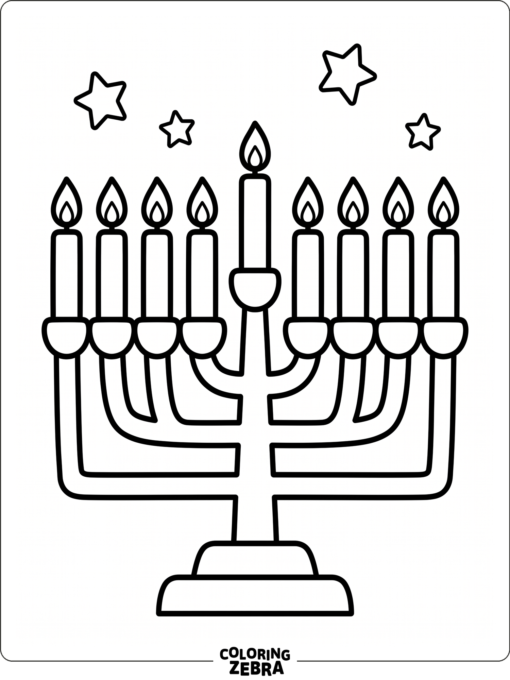

Simple Hanukkah Coloring Sheet
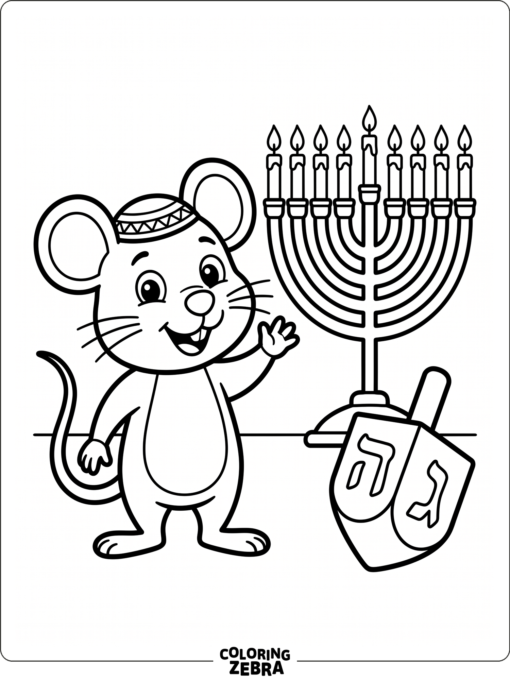

Disney Hanukkah Coloring Page
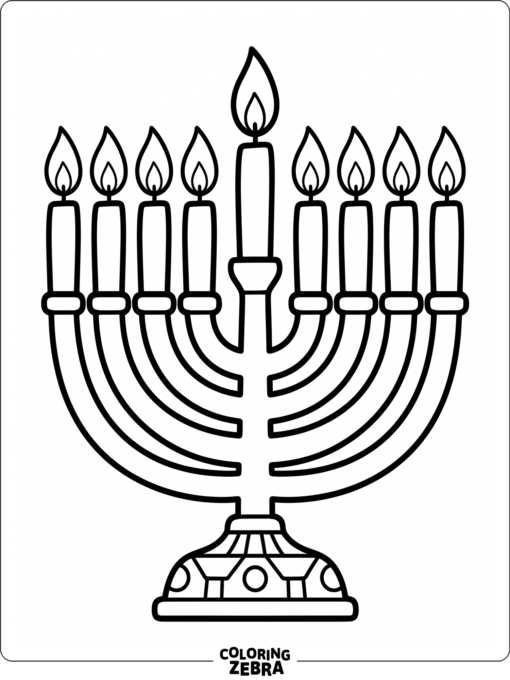

Easy Hanukkah Coloring Page
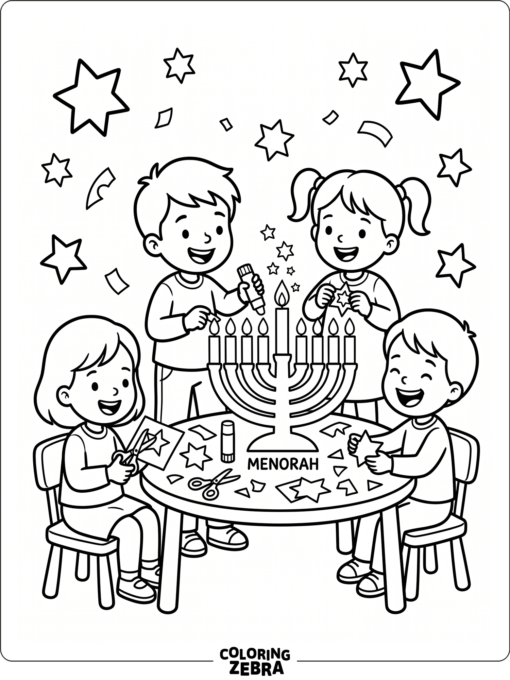

Kindergarten Hanukkah Coloring Page
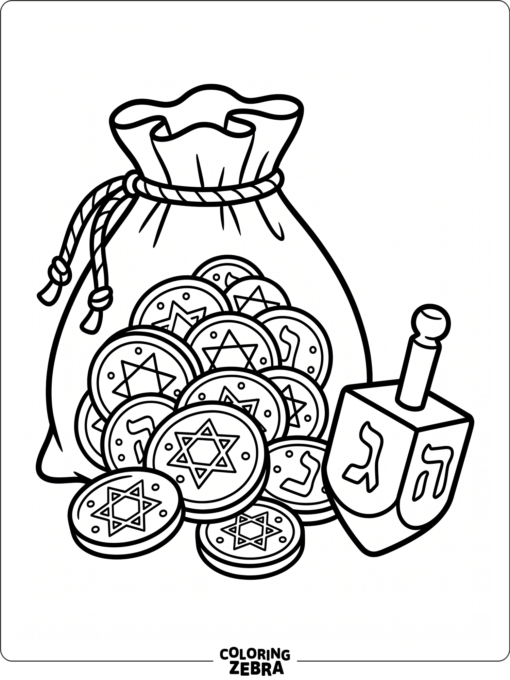

Hanukkah Gelt Coloring Page
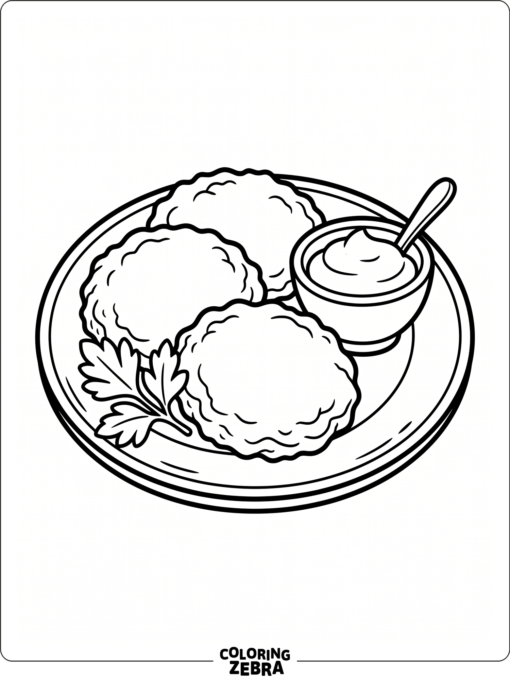

Latke Coloring Page
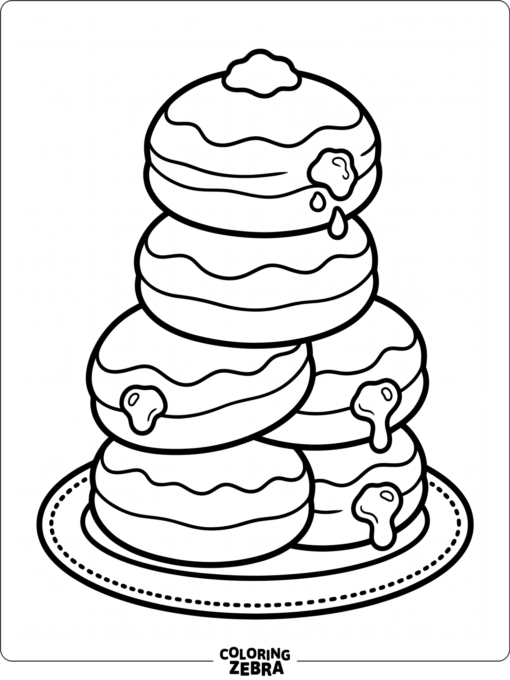

Sufganiyot Coloring Sheet
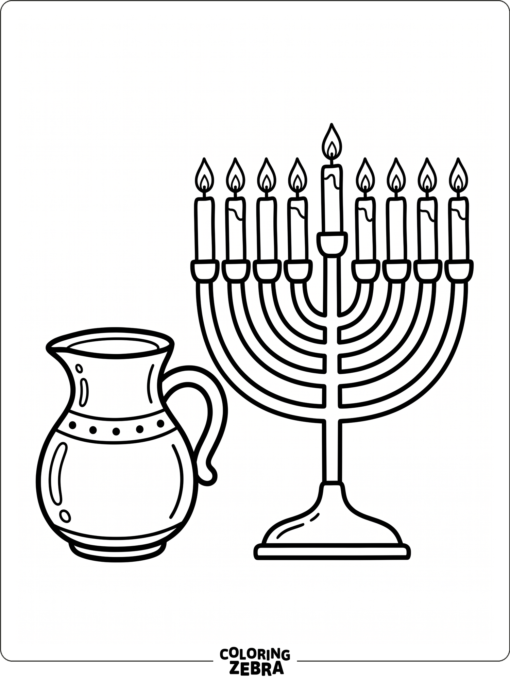

Hanukkah Oil Jug Coloring Page
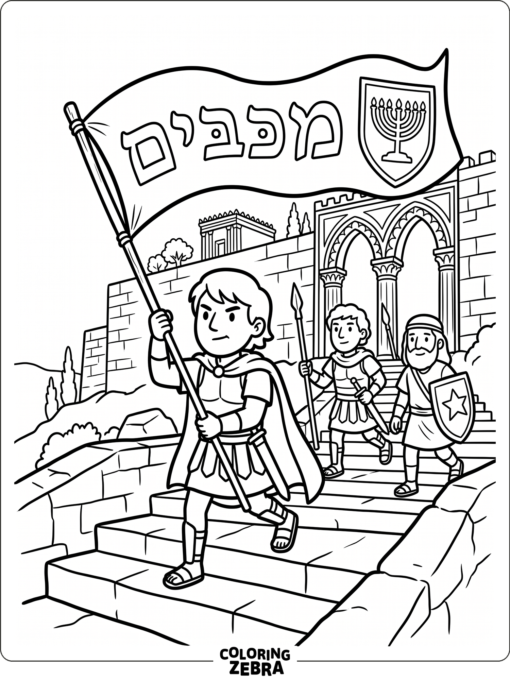

Maccabees Hanukkah Coloring Page
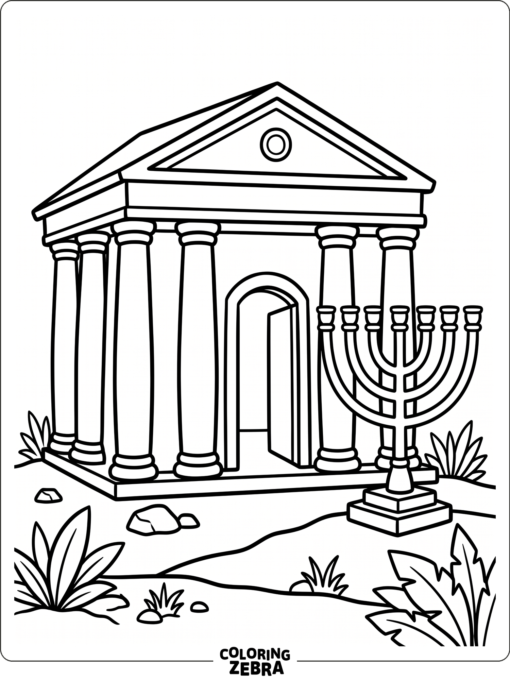

Hanukkah Temple Coloring Page
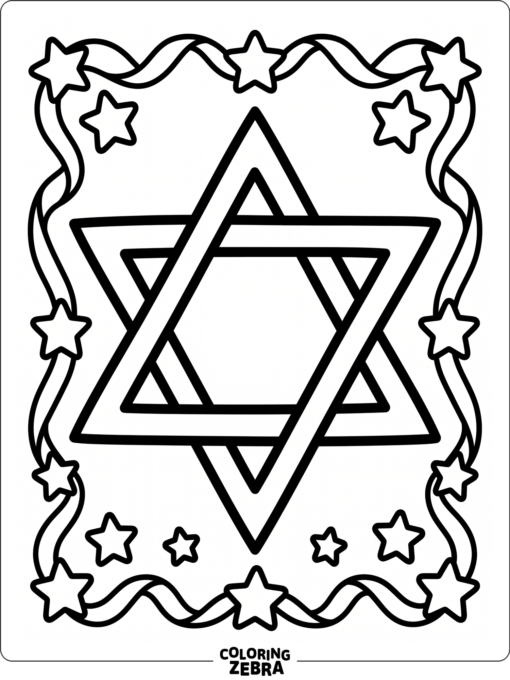

Star of David Hanukkah Coloring Page
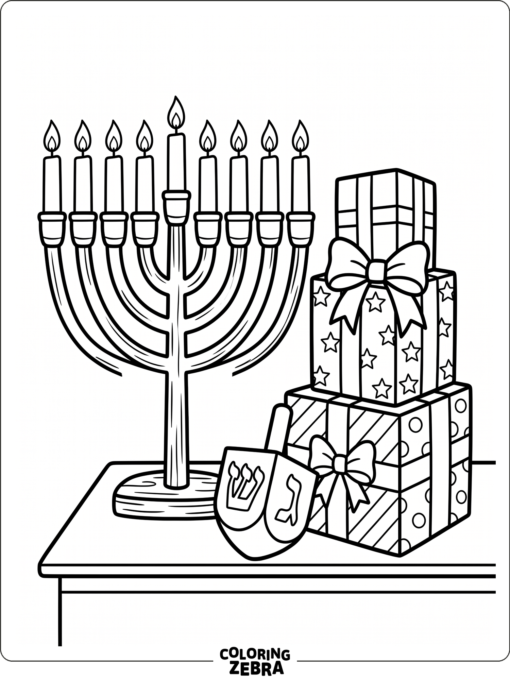

Hanukkah Gifts Coloring Page
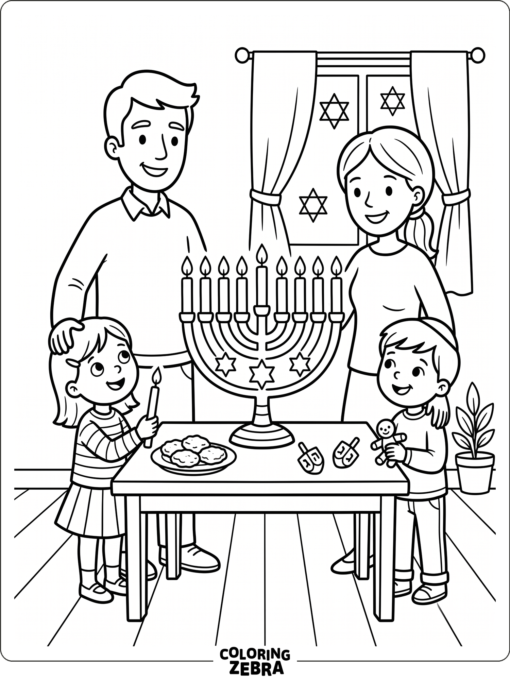

Hanukkah Family Coloring Page
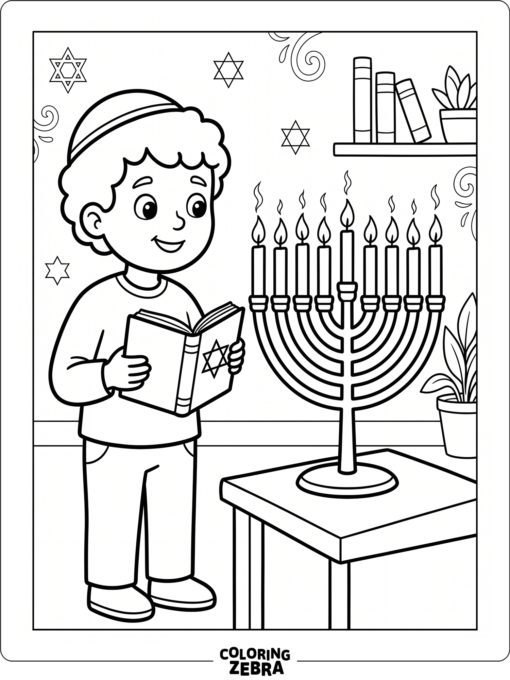

Hanukkah Prayer Coloring Page
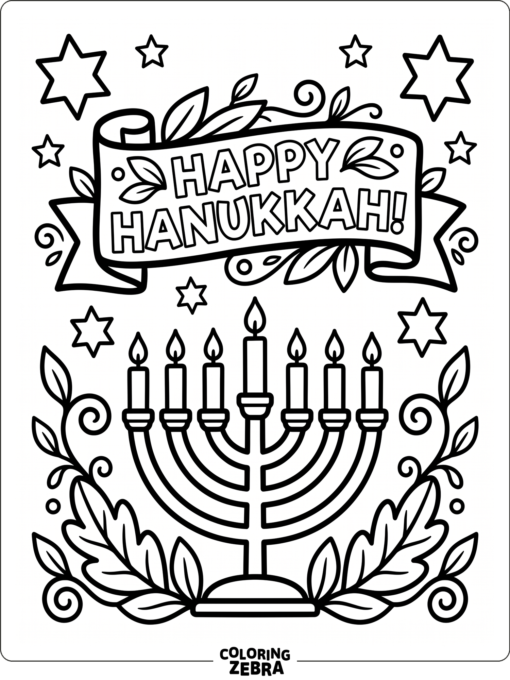

Hanukkah Blessings Quote Coloring Page
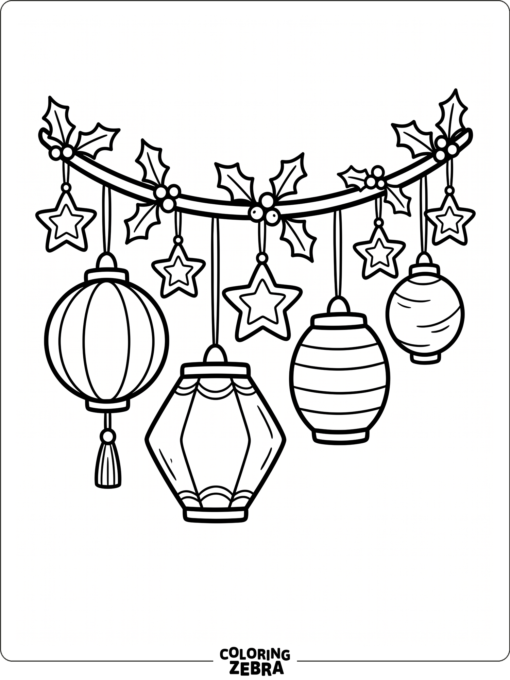

Hanukkah Decorations Coloring Page
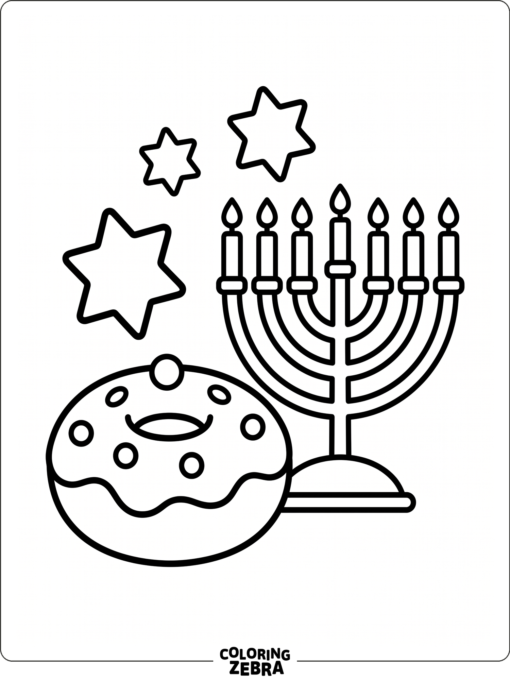

Hanukkah Donut Coloring Page
What You Will Find in the Collection
These Hanukkah Coloring Pages present 26 scenes spanning religious observance, familiar customs, traditional foods, historical references, and modern decorations. Menorah imagery appears throughout the set, from a large lamp with bold lines to a smiling cartoon design and an ornate version framed by swirls and stars. Some pictures pair a menorah with dreidels, gifts, hearts, ribbons, flames, or a simple border. Others focus on one subject, such as a large Star of David, a spinning dreidel, a plate of latkes, or an ancient columned temple.
The people-centered pictures offer several perspectives on the holiday. Children hold dreidels, a preschool child places a top near a star, and kindergarten-age children make a paper menorah. One household scene shows a family gathered around a menorah at a table, while another depicts a person holding a prayer book beside a lit lamp. Blessings and songs commonly accompany Hanukkah lighting, so these pictures can introduce a conversation about home-based religious observance without assigning specific words to the book or the scene.
Playful additions include a cartoon mouse wearing a kippah, a joyful menorah surrounded by ribbons, and a holiday garland decorated with stars and paper lanterns. Presents, hearts, and a quote banner belong to the collection’s modern celebratory imagery. Gift-giving is practiced by some families, but it varies among Jewish communities and is not the historical foundation of Hanukkah.
The Hanukkah Lamp and Eight Nights
Hanukkah is an eight-night Jewish festival that begins on the 25th day of the Hebrew month of Kislev. Because the Hebrew and Gregorian calendars are organized differently, its dates on the Gregorian calendar change from year to year. The holiday is often called the Festival of Lights, reflecting the central practice of lighting a Hanukkah lamp over successive nights.
In everyday English, this lamp is widely called a menorah. The more specific term is hanukkiah, referring to a lamp with eight festival lights and a separate helper light known as the shamash. Families generally add one festival light on each successive night, although arrangements and customs may vary. The artwork includes rows of candles, flame shapes, lit lamps, and family-centered scenes, but colorists do not need to assume that every illustrated design shows a precise ritual arrangement.
Dreidels and Hanukkah Gelt
Dreidel pictures range from individual tops to scenes of children holding them and a top spinning on a table beside coins. The dreidel is used for a traditional holiday game in which players may use gelt, coins, or other small counters. Another page shows coins collected in a pouch beside a dreidel, connecting the game imagery with Hanukkah gelt.
Traditional dreidels bear Hebrew letters associated with a phrase about the Hanukkah miracle. The letters and represented phrase differ between dreidels used in Israel and those used elsewhere. Since no specific lettering is identified in these drawings, children can enjoy the top shapes and motion lines without treating the pictures as a guide to particular Hebrew characters. In modern celebrations, gelt may mean money given during the holiday or foil-wrapped chocolate coins, although the illustrations in this set show only coins.
Oil and Traditional Foods
A small oil jug beside a menorah provides a visual link to the traditional account of a limited supply of ritually pure oil lasting for eight days. This miracle-of-the-oil narrative is emphasized in later rabbinic tradition and helps explain why foods fried in oil became closely associated with Hanukkah.
The food coloring sheets include latkes served with sour cream and sufganiyot stacked with powdered sugar and jelly. A separate round donut with sprinkles appears beside a menorah. Latkes are fried potato pancakes, while sufganiyot are filled, fried pastries especially associated with Israeli Hanukkah celebrations. Recipes, toppings, and preferred holiday dishes differ among families and communities, making these pictures useful prompts for discussing personal food traditions.
The Maccabees and the Temple
The historical scenes broaden the collection beyond present-day customs. One design shows the Maccabees carrying a banner near Temple steps, and another features an ancient temple with columns and a menorah outside. The building is best understood as an artistic evocation rather than an archaeologically exact reconstruction.
Hanukkah commemorates the Maccabees’ victory under Seleucid rule and the rededication of the Second Temple in Jerusalem during the second century BCE. The historical rededication and the later rabbinic account of the oil offer related but distinct ways of understanding the holiday. These images can support an age-appropriate sequence: conflict affected Jewish worship, the Maccabees prevailed, the Temple was rededicated, and its lights became an enduring focus of remembrance. No individual figure or banner wording needs to be invented to explore that sequence.
Coloring Ideas for Simple and Detailed Designs
The simpler Hanukkah Coloring Pages are well suited to broad crayons, washable markers, or colored pencils held by younger colorists. Bold menorah outlines, the oil jug, large dreidels, and the central Star of David provide roomy sections with clear boundaries. Children can practice repeating a palette across candle holders, flames, coins, and stars or choose a different color for each large shape.
Detailed designs invite a slower approach. Fine colored pencils can define ornate swirls, ribbon borders, garland ornaments, powdered sugar, sprinkles, and small coin details. Metallic pencils or gel pens can accent flames, stars, and gelt, while layered yellow, orange, and red create variation in the flame shapes. Colors do not need to follow a single prescribed holiday palette; personal choices can distinguish historical stonework, family scenes, foods, and decorative motifs.
The large Star of David may be colored as a symbol of Jewish identity, but it should not be presented as exclusive to Hanukkah. Likewise, small stars surrounding menorahs can simply be treated as decorative shapes unless the drawing clearly identifies them otherwise. This distinction helps children observe what an image actually shows while learning that not every Jewish symbol belongs only to one holiday.
Ways to Use Finished Pictures
Finished Hanukkah Coloring Pages can support family conversations, religious-school lessons, homeschool studies, or quiet activities during the eight-night festival. Arrange several pictures in order to move from the Maccabean story and Temple rededication to the oil tradition, lamp lighting, dreidel play, and holiday foods. A child can also select one image each night and explain the symbol or custom shown.
- Display the family and prayer-book scenes near a household activity area to highlight Hanukkah as a home-centered observance.
- Use the latke, sufganiyot, and oil-jug pictures to introduce a discussion about why fried foods are customary.
- Pair the dreidel and gelt sheets with a supervised game using suitable counters.
- Combine garlands, presents, ribbons, and paper-lantern scenes into a modern decorative display while keeping historical images in their own labeled group.
- Invite older children to write a researched caption for the Maccabees or Temple picture without inventing dialogue or banner text.
- Reduce selected designs before printing to create folded cards, place markers, or a sequence of eight nightly decorations.
Respectful Language and Context
Hanukkah and Chanukah are both accepted English transliterations of the same Hebrew holiday name, so readers may also encounter Chanukah coloring sheets. The celebration has religious, historical, family, and cultural dimensions, and customs are not identical in every community. Presenting its lamps, prayers, games, foods, and history on their own terms gives each picture richer meaning than treating the festival as a counterpart to an unrelated winter holiday.
People Often Ask Us…
-
What does “Hanukkah” mean?
-
How is a Hanukkah menorah commonly lit?
-
How is the dreidel game played?
-
Why are dreidel letters different in Israel?
-
Why does Hanukkah move on the Gregorian calendar?