
Martin Luther King Jr. Coloring Pages
Martin Luther King Jr. Coloring Pages trace a visual path through his childhood, ministry, speeches, family, and civil rights leadership; podium scenes, a bus, a ballot box, and the Lincoln Memorial connect the artwork with important history. Doves, helping hands, hearts, and justice scales make ideas such as peace, equality, and service interesting to explore through color. The collection also includes simple portraits, a four-scene timeline, tracing, color-by-number, and commemorative designs.
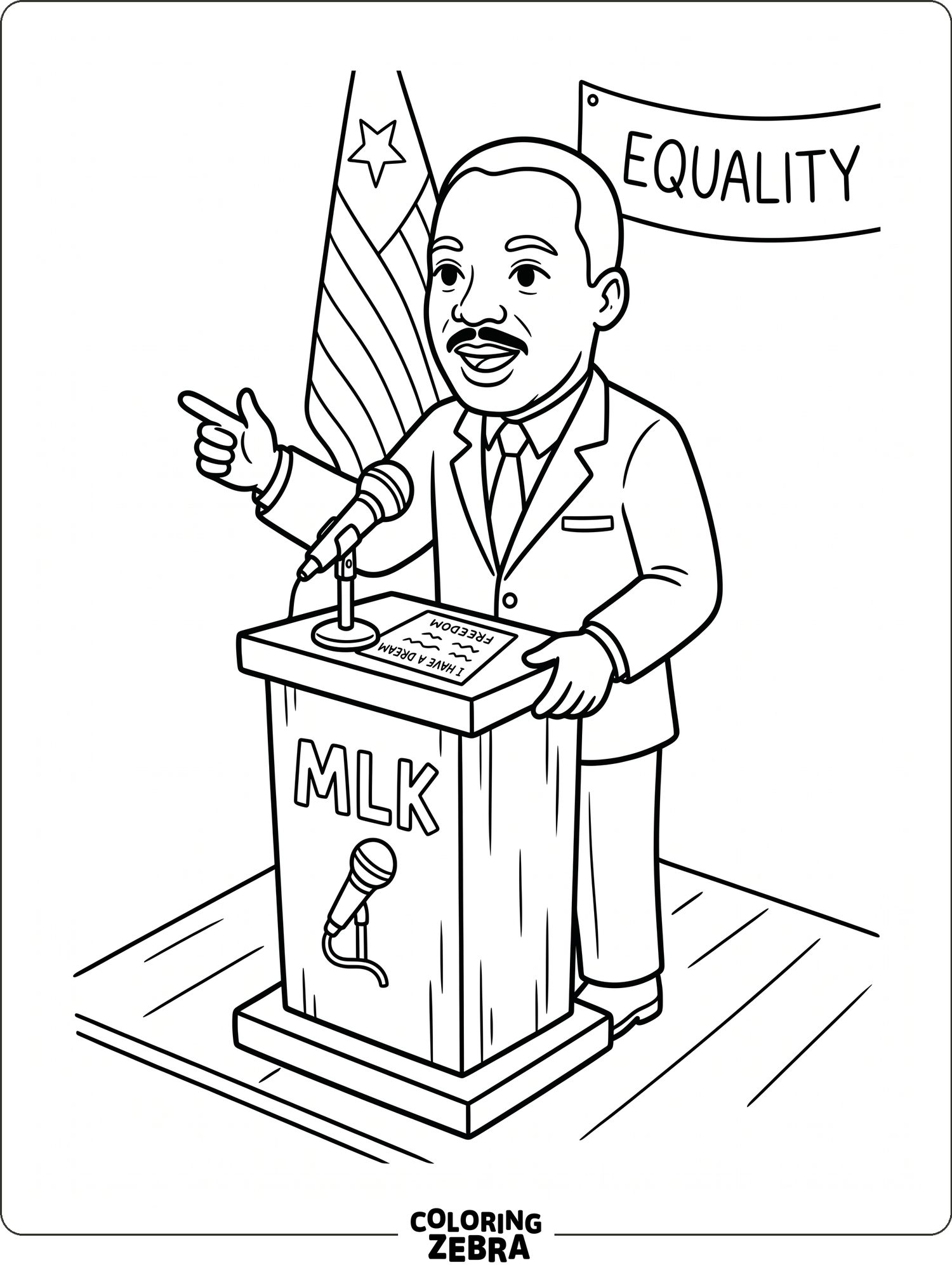
Print detailed scenes on bright white heavyweight paper so markers or gel pens are less likely to show through. Choose “fit to printable area” to preserve every border, or print at 100 percent for the original page size. Draft or grayscale mode can conserve ink when printing classroom sets.
Related coloring pages
Printable Martin Luther King Jr. Coloring Pages
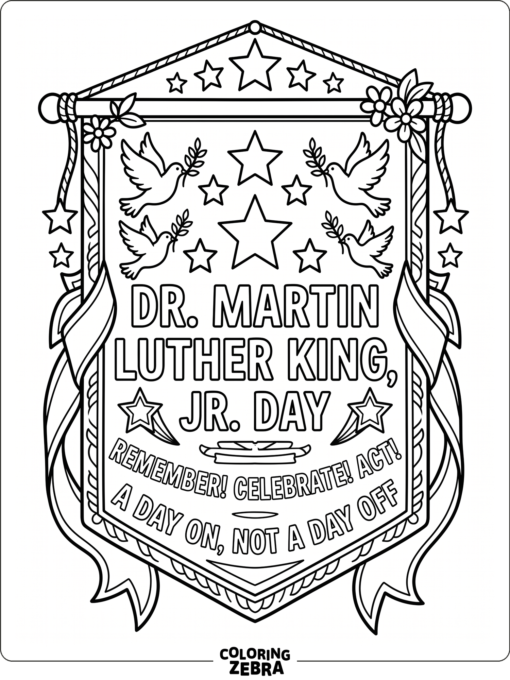

MLK Day Coloring Page
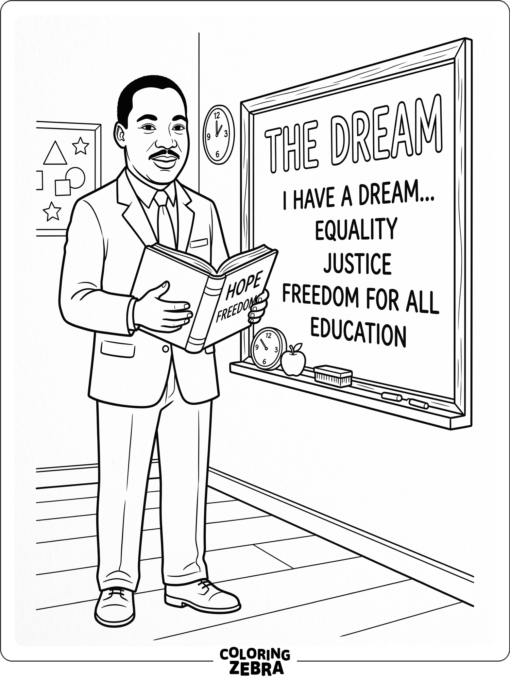

Martin Luther King Jr Coloring Page for Kids
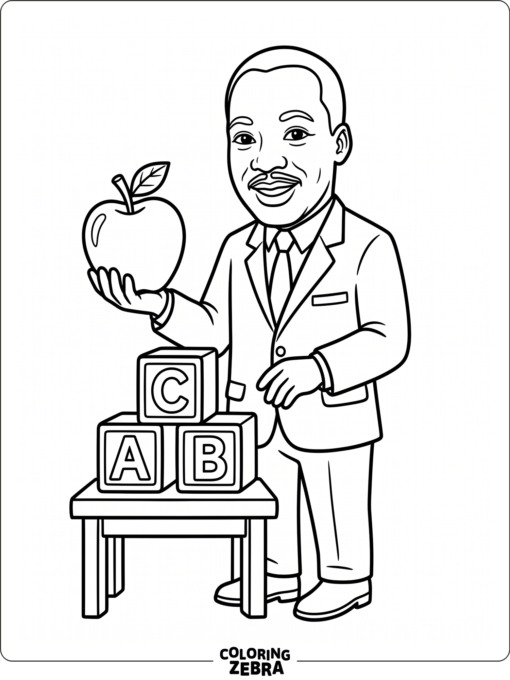

Martin Luther King Jr Coloring Page for Preschool
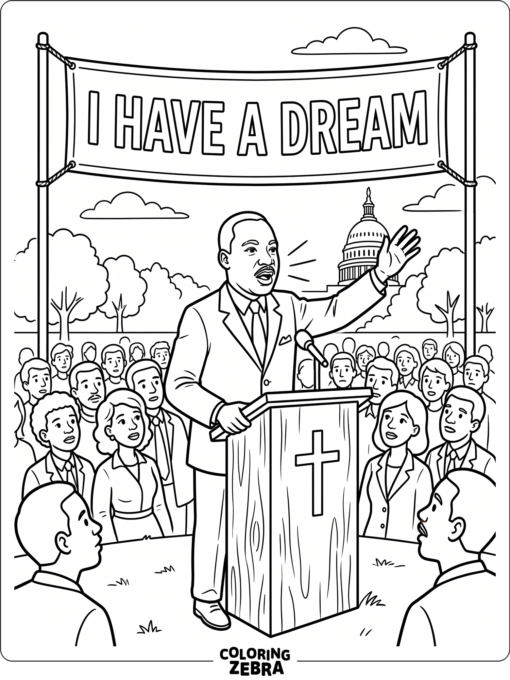

Martin Luther King Jr I Have a Dream Coloring Page

Kindergarten Martin Luther King Jr Coloring Page

Easy Martin Luther King Jr Coloring Page
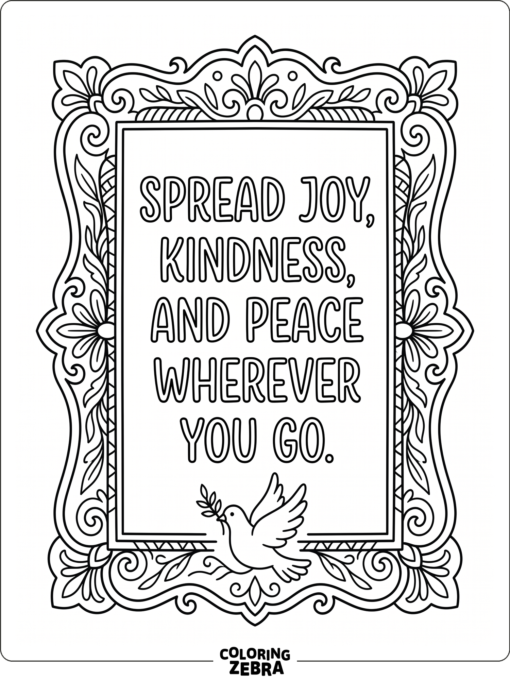

MLK Quote Coloring Page
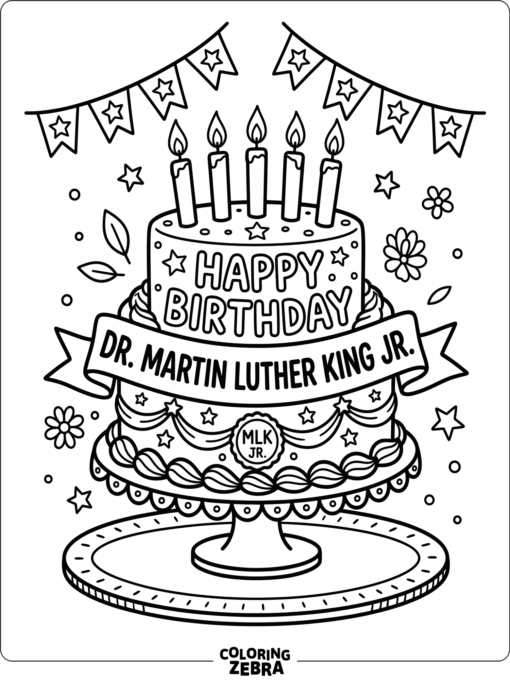

Happy Birthday Martin Luther King Coloring Page
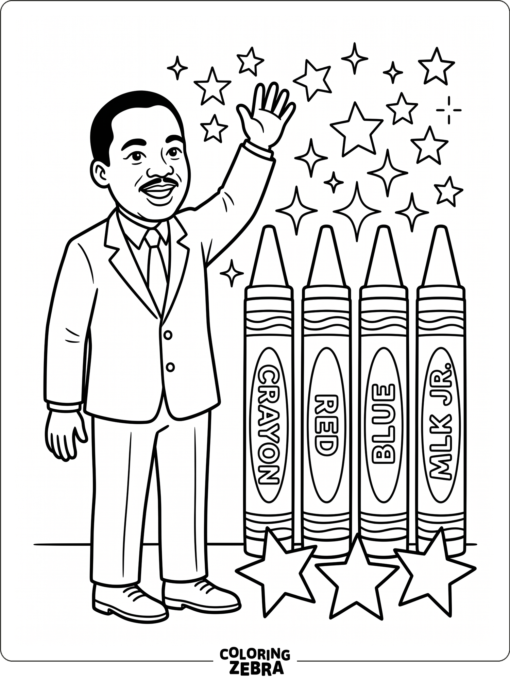

Martin Luther King Coloring Page for Toddlers
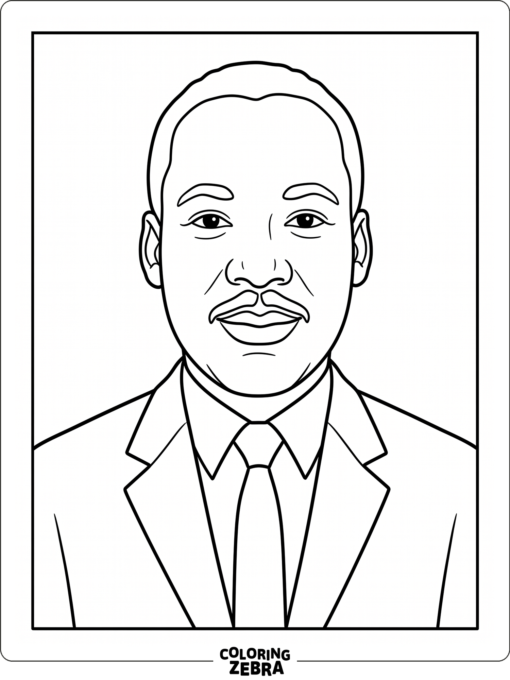

Martin Luther King Jr Face Coloring Page
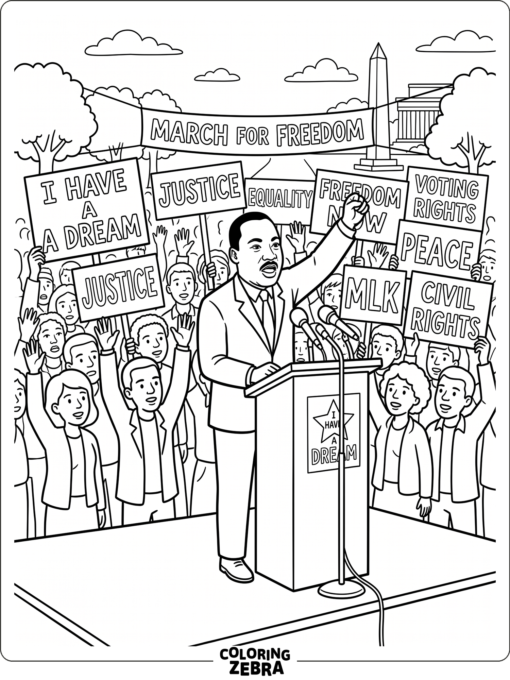

Martin Luther King Jr Civil Rights Movement Coloring Page

MLK Day Peace Dove Coloring Page
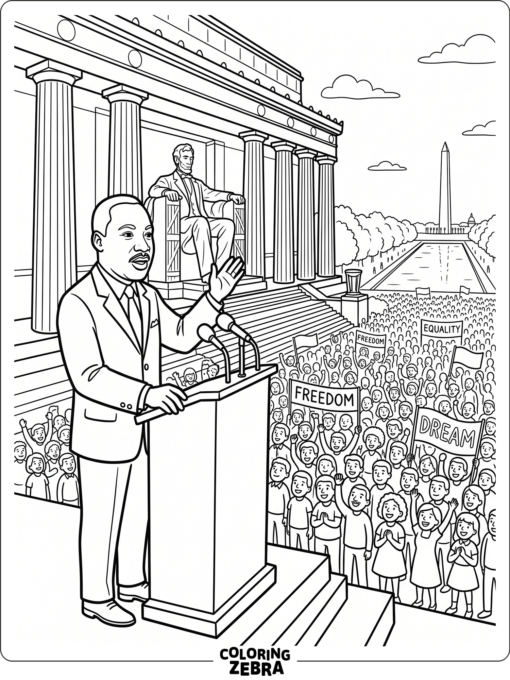

Martin Luther King Jr March on Washington Coloring Page

MLK Day Color by Number Page
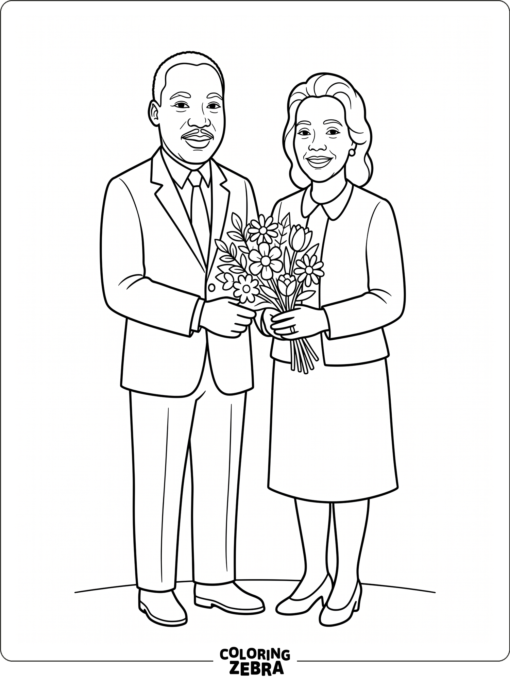

Martin Luther King Jr and Coretta Scott King Coloring Page

MLK Day Scales of Justice Coloring Page
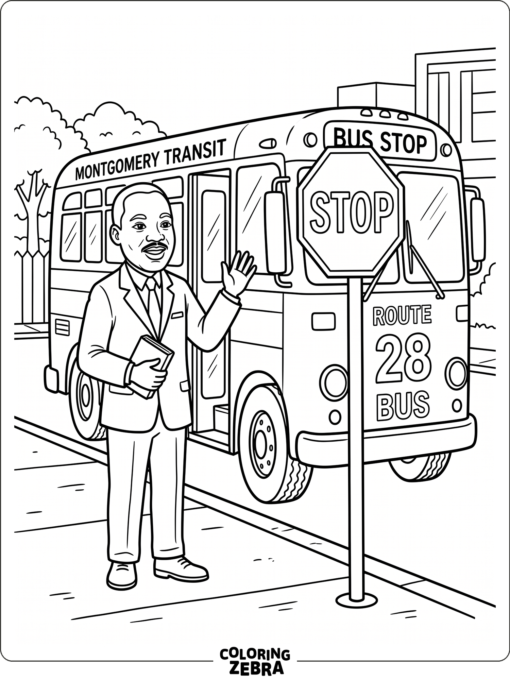

Martin Luther King Jr Montgomery Bus Boycott Coloring Page
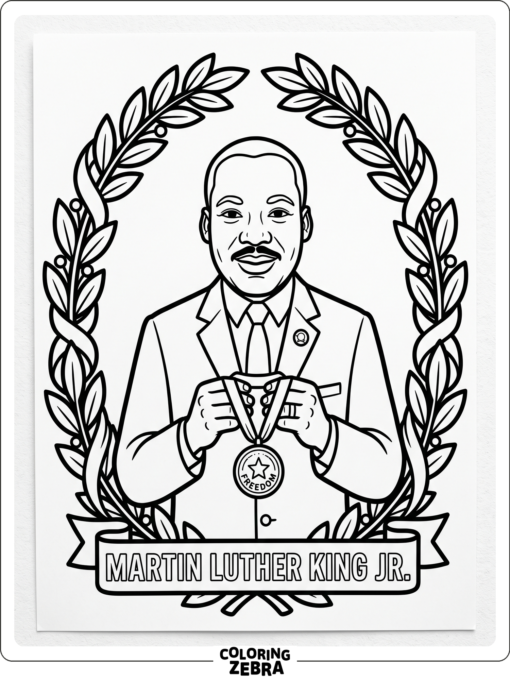

Martin Luther King Jr Nobel Peace Prize Coloring Page

MLK Day Helping Hands Coloring Page
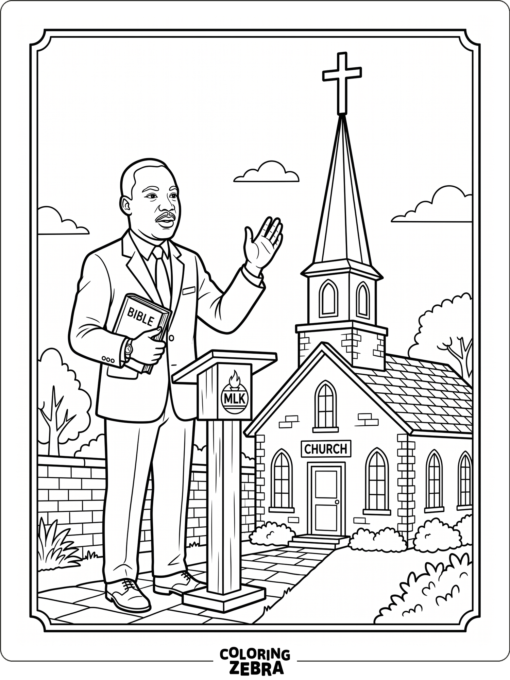

Martin Luther King Jr Church Coloring Page
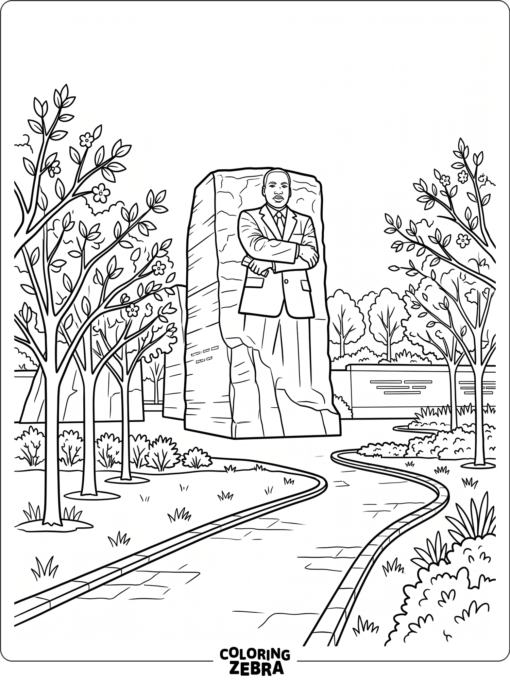

Martin Luther King Jr Memorial Coloring Page
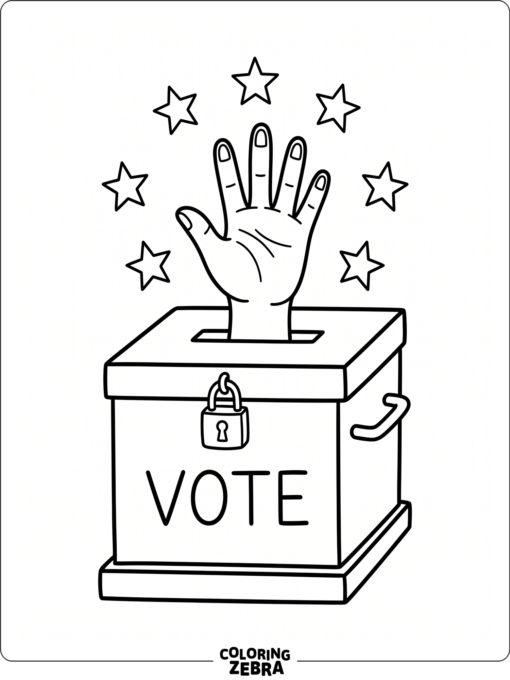

Martin Luther King Jr Voting Rights Coloring Page
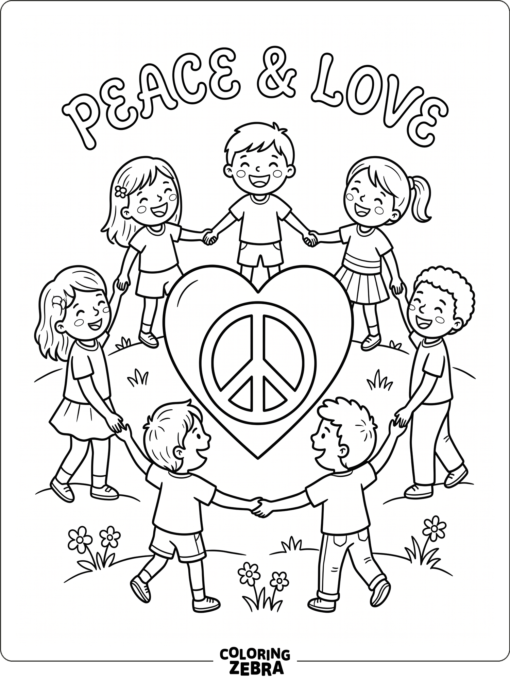

MLK Day Kindness Coloring Page
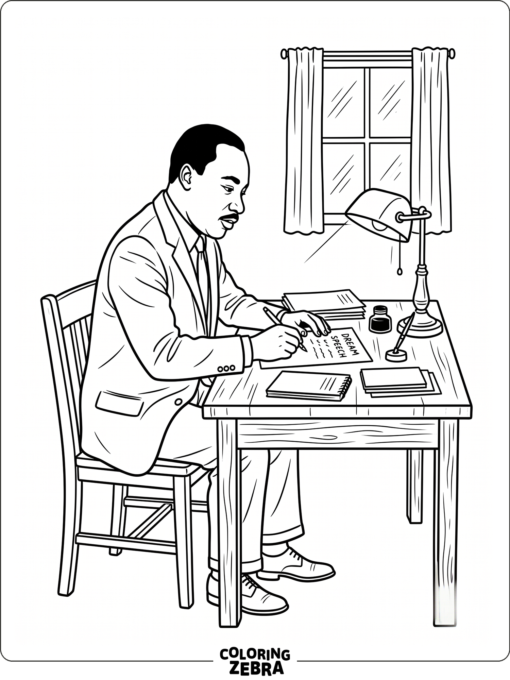

Martin Luther King Jr Letter From Birmingham Jail Coloring Page
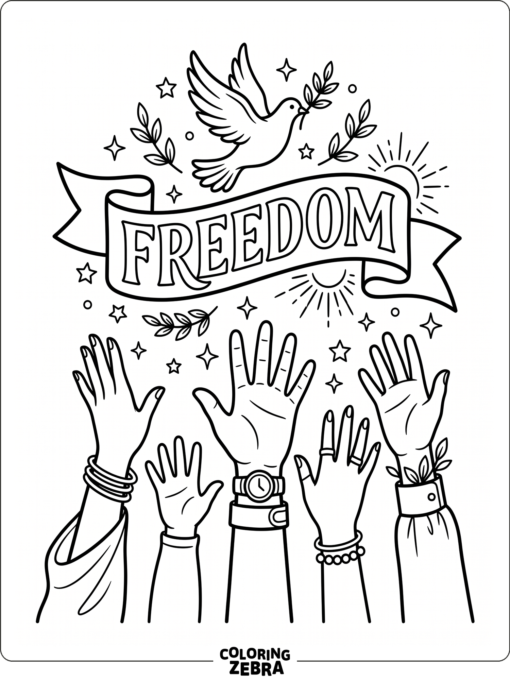

MLK Day Freedom Coloring Page
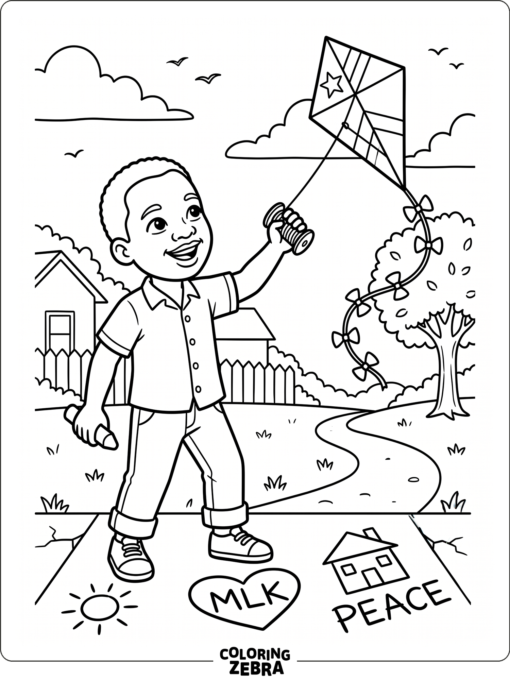

Martin Luther King Jr Childhood Coloring Page
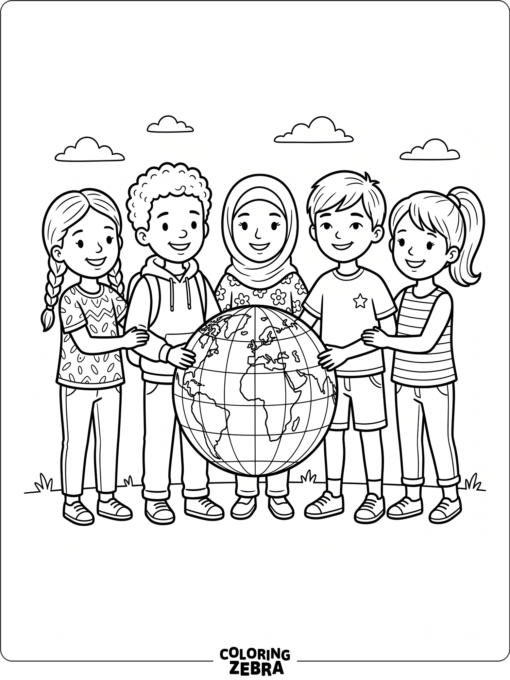

MLK Day Diversity Coloring Page
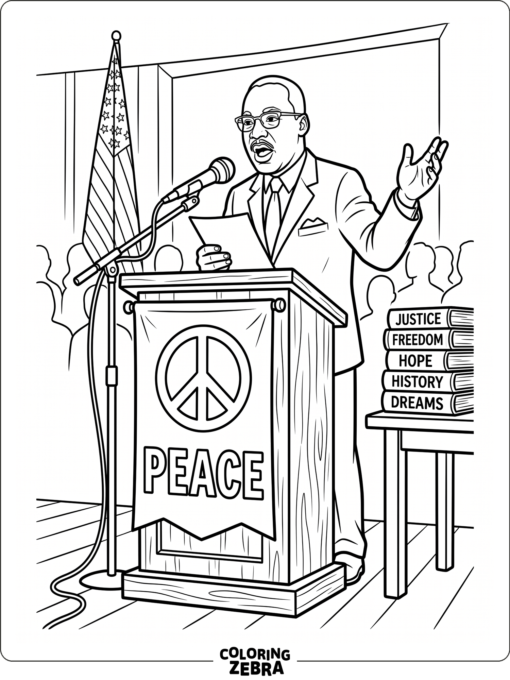

MLK Day Middle School Coloring Page
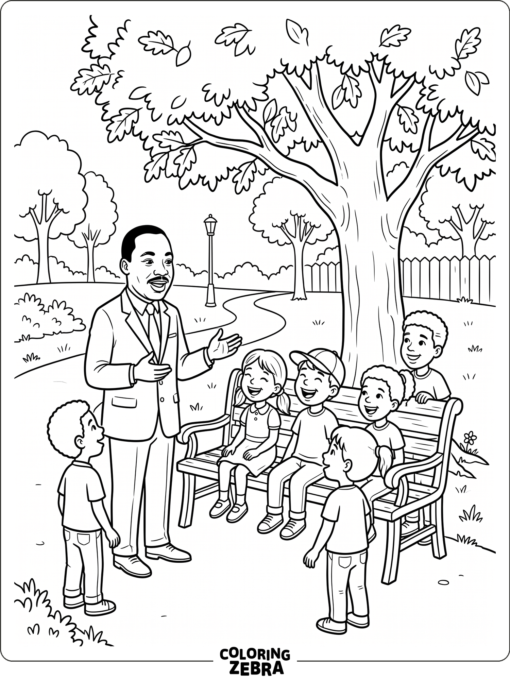

Martin Luther King Jr. and Kids Coloring Page
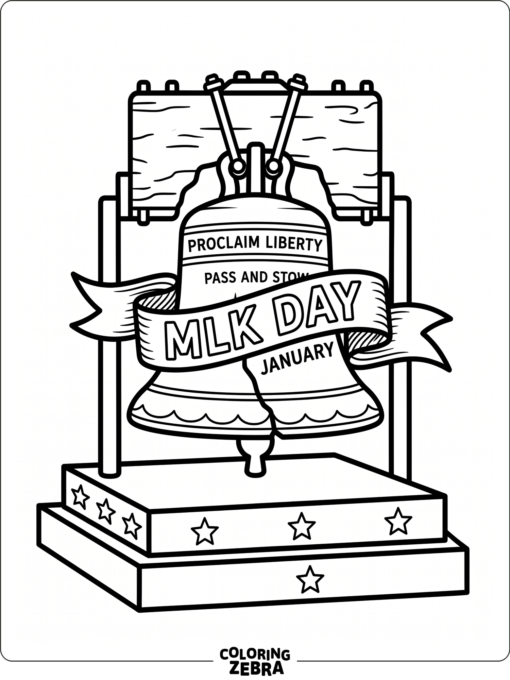

MLK Day Liberty Bell Printable
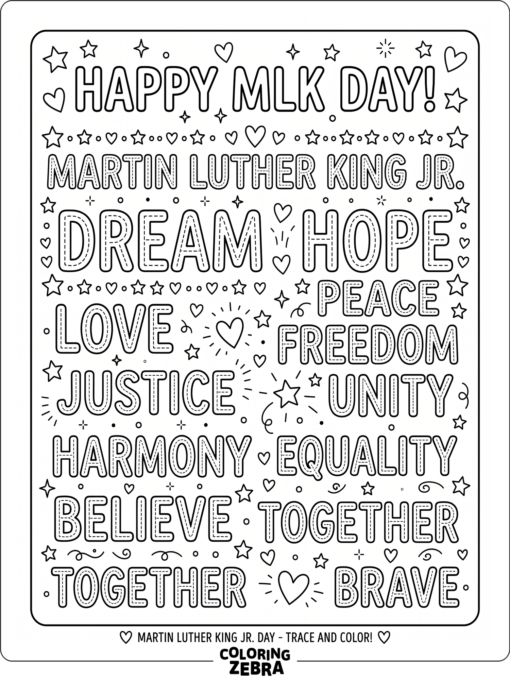

MLK Day Tracing Coloring Sheet

MLK Day School Assembly Coloring Page
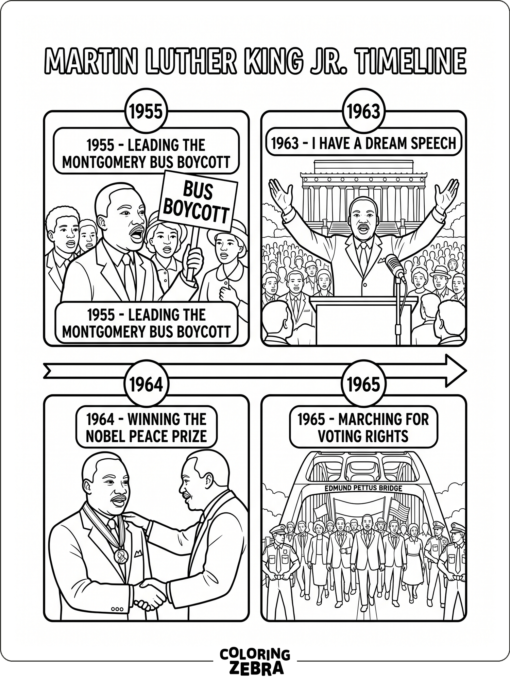

Martin Luther King Jr. Timeline Coloring Page

MLK Day Sunday School Coloring Page

Martin Luther King Jr. Nonviolence Coloring Page
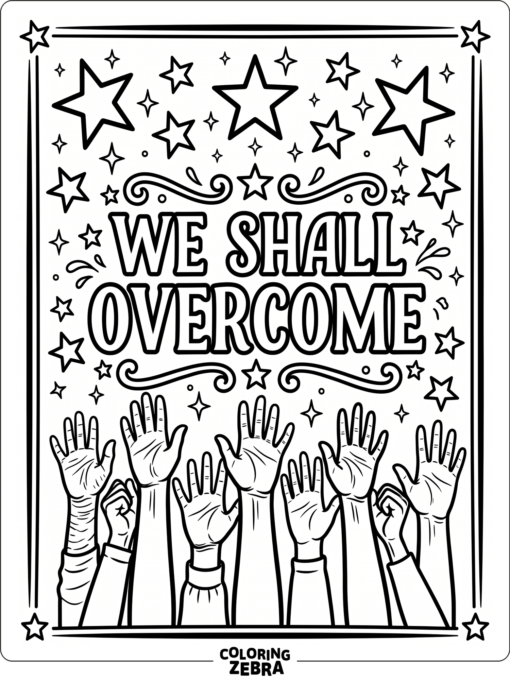

MLK Day We Shall Overcome Coloring Page
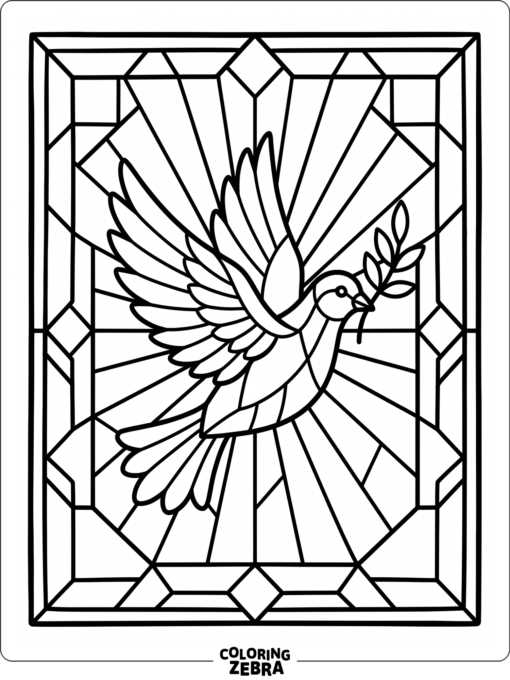

MLK Day Stained Glass Coloring Page
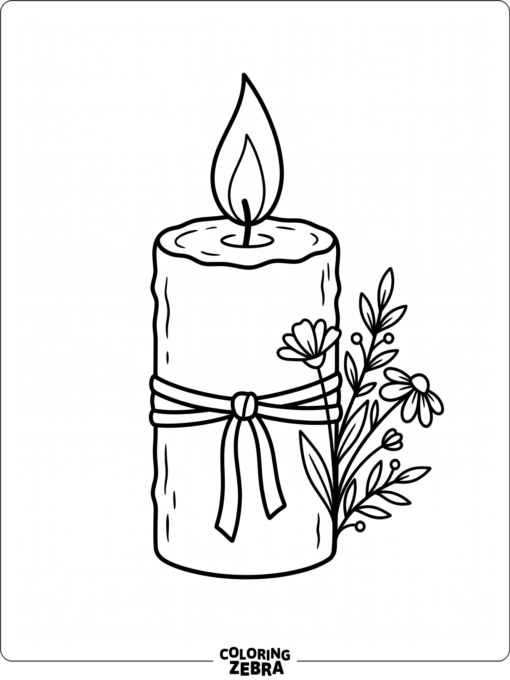

MLK Day Remembrance Candle Coloring Page
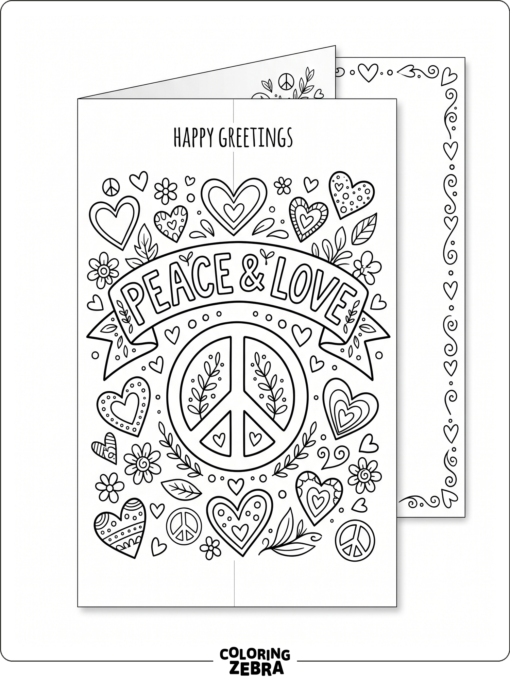

MLK Day Greeting Card Coloring Page
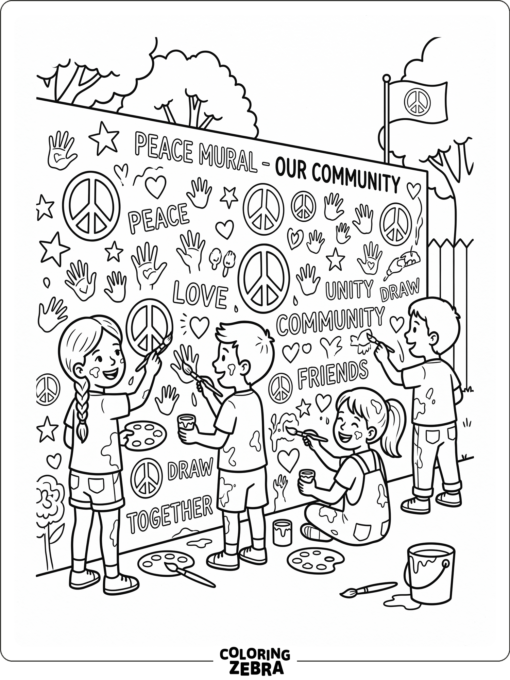

MLK Day Community Mural Coloring Page
Exploring Martin Luther King Jr. Coloring Pages
These Martin Luther King Jr. Coloring Pages combine biography, civil rights history, civic ideas, and commemorative symbols. The set ranges from a clean-line portrait and child-friendly school designs to detailed crowds, memorial imagery, and a four-part timeline. King appears reading, writing at a desk, speaking into a microphone, standing near a church, releasing a dove, and addressing people from a podium. Other pages shift attention to the wider movement through a bus, voting ballot box, scales of justice, freedom banner, raised hands, and children working together.
Some illustrations refer to recognizable historical contexts, while others communicate ideas symbolically. The Lincoln Memorial, podium, speech notes, crowd, and “I Have a Dream” banner recall King’s public speaking and the March on Washington. Doves, peace signs, hearts, flowers, ribbons, and helping hands represent nonviolence, care, cooperation, and service rather than literal moments from his biography. This distinction gives families and educators an opportunity to discuss the difference between a documented event and an artist’s symbol.
From Childhood to Ministry and Leadership
Martin Luther King Jr. was born in Atlanta, Georgia, on January 15, 1929. The young King illustration, chalkboard, books, apple, blocks, kite, and crayons can introduce a general conversation about childhood and learning. These decorative objects should not be treated as records of specific experiences. Older students can use the timeline printable to organize verified events and add brief captions from a trusted history source.
King became a Baptist minister, and his faith influenced his language, values, and approach to leadership. The church steeple, cross, and Sunday school scene reflect this important part of his life without identifying a particular congregation. A page featuring King with Coretta Scott King also opens a broader discussion of family and collective leadership. Coretta Scott King was a civil rights and peace activist in her own right, and she worked to preserve his legacy and establish a federal holiday in his honor.
Nonviolent Action and the Civil Rights Movement
The bus and stop sign can support a lesson about the Montgomery bus boycott, which began in 1955 as a protest against segregated public transportation. King emerged as a prominent leader during the campaign, but the boycott depended on Rosa Parks, local organizers, participating residents, and many other community members. Because the illustration does not identify an exact location or event, it is best described as a visual prompt for studying bus desegregation rather than a portrait of a specific historical moment.
Nonviolent protest means organized resistance to injustice without the use of violence. King helped lead the Southern Christian Leadership Conference, which coordinated nonviolent civil rights campaigns. In these civil rights coloring pages, flying doves, joined hands, peace signs, and a released dove provide accessible ways to discuss that commitment. They can also prompt questions about the planning, discipline, courage, and cooperation required for peaceful public action.
The March on Washington
On August 28, 1963, King delivered his “I Have a Dream” speech during the March on Washington for Jobs and Freedom. He spoke from the Lincoln Memorial to a vast gathering seeking civil rights and economic justice. The march was organized by a broad coalition, so it should not be presented as King’s achievement alone. Podiums, microphones, notes, signs, crowds, and the Lincoln Memorial help students identify the setting and visual features associated with this historic event.
For a focused activity, children can color the speaker and podium first, then use a coordinated palette for the crowd and memorial. Leaving speech notes and sign areas light will keep any printed words readable. On the framed inspirational design, check the visible wording before discussing its source; an unattributed message should not automatically be presented as a quotation from King.
Voting Rights Justice and Equal Belonging
The ballot box, raised hand, and stars introduce voting rights and civic participation. Discriminatory laws and practices prevented many Black Americans from voting freely, and sustained movement activism contributed to passage of the Voting Rights Act of 1965. King was an influential advocate, but this progress resulted from the work of many activists, organizers, voters, and communities.
Scales of justice offer a clear starting point for discussing fairness under the law. The Liberty Bell and freedom banner are broad symbols of liberty, while children from different backgrounds gathered around a globe suggest equal dignity and belonging. Hearts, helping hands, linked children, and a handprint mural shift the emphasis toward cooperation. Finished pages can become a classroom display organized around themes such as justice, civic voice, peaceful action, and community responsibility.
Coloring Different Page Styles
- Simple portraits: Use pencils or crayons for smooth skin, hair, and clothing areas, then add one contrasting background color to keep attention on King’s expression.
- Speech and crowd scenes: Color the foreground with stronger values and use lighter tones for distant figures or architecture. This creates depth without obscuring small signs and faces.
- Doves and symbolic designs: Keep the dove white by shading pale blue, gray, or another soft color around its outline. Hearts, ribbons, flowers, stars, and geometric stained-glass panels can carry brighter accents.
- Activity pages: Follow the key on the color-by-number balloons, trace MLK Day words slowly, and add dates or short factual notes to the timeline.
- Memorial and remembrance pages: Muted colors can suit the candle, flowers, trees, walkway, and memorial, while a brighter ribbon provides a focal point.
- Community scenes: Give handprints, clothing, mural sections, and globe details varied colors while preserving the outlines that show people cooperating.
Commemoration Honors and Service
Several Martin Luther King Jr. Coloring Pages focus on remembrance: an MLK Day banner, birthday cake, greeting card, candle, medal, and Washington, D.C., memorial. King received the Nobel Peace Prize in 1964 for his commitment to nonviolent civil rights activism. The illustrated medal is not specifically identified, however, so it is more accurate to describe it as a symbol of recognition unless the printable itself provides a label.
Martin Luther King Jr. Day is a federal holiday observed on the third Monday in January, near King’s January 15 birthday. Holiday legislation was signed in 1983, and the first federal observance took place in 1986. The day is also closely associated with community service. Families, classes, and community groups can pair completed MLK Day coloring pages with a book discussion, a service project plan, a hallway timeline, or written reflections about how people can improve their communities.
Using the Finished Artwork Thoughtfully
- Arrange speech, bus, voting, and memorial pages in a chronological display.
- Group doves, peace signs, hands, and justice scales by the ideas they symbolize.
- Invite students to write one verified historical fact beneath each finished illustration.
- Combine handprint mural pages into a collaborative bulletin board about belonging and service.
- Use the folded card as a message of peace or appreciation for a community helper.
The “We Shall Overcome” design can introduce the historic freedom song associated with the civil rights movement; the song was not written by King. Across the collection, accurate captions can help distinguish King’s documented words and actions from general symbols of freedom, justice, and peace. That approach honors his influence while recognizing the many people and organizations that built the movement alongside him.
People Often Ask Us…
-
What was King’s role in the SCLC?
-
What did nonviolent protest involve?
-
Who organized the March on Washington?
-
Why did King receive the Nobel Peace Prize?
-
How do King’s birthday, MLK Day, and his death date differ?